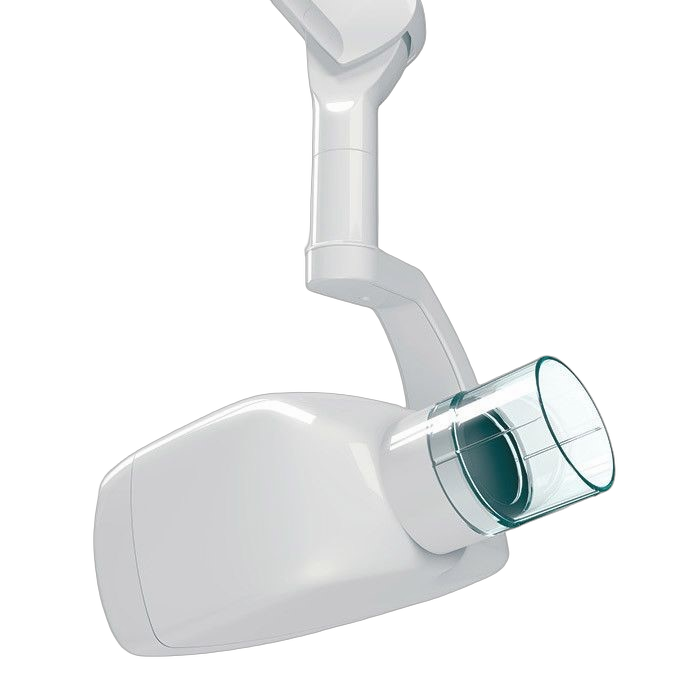

Key takeaways
- Price range (2026): Wall-mounted intraoral X-ray generators cost $5,000-$12,000; portable/handheld units cost $8,000-$18,000. Digital sensors add $3,000-$10,000 on top.
- Primary decision factor: Generator type (wall-mounted vs portable) sets your workflow, then sensor type (CMOS vs phosphor plate) sets your imaging speed and per-image cost.
- If your practice has 2+ operatories and takes 20+ images per day - a wall-mounted DC generator with CMOS sensor in each surgery delivers the fastest chairside workflow.
- Focal spot size: 0.4mm (fine) delivers sharper diagnostic detail for endodontic and periapical work; 0.7mm (standard) is adequate for general bitewing and screening exposures.
- Arm reach: Wall-mounted arms range from 150-220cm extension - measure your operatory depth before ordering to confirm the tube head reaches every patient position.
- Compliance: All dental X-ray equipment requires ARTG listing (TGA), state radiation authority registration, and annual ARPANSA compliance testing.
- Software integration: Confirm the sensor and imaging software integrate with your practice management system (e.g. Dental4Windows, EXACT, Dentally) before purchasing.
The dental practice owner's checklist for buying an intraoral x-ray unit (2026)
Intraoral X-ray is the diagnostic backbone of every dental practice - periapical, bitewing and occlusal exposures account for 80-90% of all dental imaging in a typical Australian general practice. The generator itself is a mature technology where the key variables are power output, focal spot size, arm reach and DC vs AC operation. The bigger procurement decision sits with the imaging system: CMOS sensors deliver instant chairside images but cost $3,000-$8,000 per sensor and are vulnerable to cable damage; phosphor plates are thinner and more comfortable for patients but add a scanning step that costs 30-60 seconds per image.
This guide walks practice owners, dental equipment buyers and practice managers through generator selection, sensor comparison, specification evaluation and supplier assessment for intraoral X-ray units in Australia. If you are within 4-6 weeks of purchasing, get quotes for intraoral X-ray units from verified Australian suppliers on MedicalSearch. For practices also evaluating panoramic imaging, the OPG X-ray machine buying guide covers the complementary decision.
Practices where this buying decision matters most:
- New dental practices specifying imaging equipment for their first fitout
- Established practices upgrading from film or first-generation digital sensors
- Multi-surgery practices standardising X-ray systems across operatories
- Mobile dental services and aged care outreach programs evaluating portable units
- Endodontic and implant-focused practices requiring high-resolution periapical imaging
Choose your generator and sensor configuration
Before costing anything, confirm which generator type and imaging system suit your practice layout and clinical workflow. Your choice here sets your price bracket and daily imaging speed.
Type | Key Spec | Best For |
|---|---|---|
Wall-mounted DC generator |
60-70 kVp, 4-8 mA, 150-220cm arm |
Fixed operatories - lowest per-image cost, fastest positioning with articulated arm |
Portable/handheld DC unit |
60-70 kVp, 2-3 mA, 1.5-2.5 kg |
Multi-room practices, mobile clinics, aged care outreach, rural and remote services |
CMOS digital sensor |
Size 1/2, USB, instant image |
High-volume practices (20+ images/day) where chairside speed is the priority |
Phosphor plate (PSP) system |
Reusable plates + desktop scanner |
Practices prioritising patient comfort (plates are thinner than CMOS sensors) or running lower daily volume |
If your practice runs 2+ operatories taking 20+ images/day, wall-mounted generators with dedicated CMOS sensors per room deliver the fastest workflow. For a single-surgery practice at lower volume, one portable unit shared across rooms with a PSP system keeps costs under $15,000 total.
Evaluate the key specifications
With your configuration confirmed, these are the specs that determine whether a given model meets your diagnostic and workflow requirements.
Specification | Typical Range | Buyer Consideration |
|---|---|---|
Focal spot size |
0.4mm (fine) or 0.7mm (standard) |
0.4mm delivers sharper periapical detail for endo and implant work; 0.7mm is adequate for general screening and bitewings |
kVp range |
60-70 kVp |
Higher kVp penetrates denser structures better - 70 kVp preferred for posterior bitewings and molar periapicals |
Exposure time |
0.01-0.5 seconds |
DC high-frequency generators deliver shorter, more consistent exposures than older AC units - reducing dose and motion blur |
Arm reach and stability |
150-220cm extension |
Measure your operatory depth from wall to patient - insufficient arm reach forces awkward positioning and retakes |
Sensor resolution (CMOS) |
20-33 line pairs/mm |
Higher lp/mm delivers finer detail for endodontic file measurements and periapical pathology detection |
Sensor active area |
Size 1 (24 x 40mm), Size 2 (31 x 41mm) |
Size 2 covers most adult periapical and bitewing needs; Size 1 for anterior and paediatric exposures |
Understand the full cost breakdown (2026 prices)
Purchase price is only part of the picture - sensor cost, compliance fees and software licensing drive the total investment beyond the generator price alone.
Category | Price Range (AUD) | Typical Configuration |
|---|---|---|
Wall-mounted DC generator |
$5,000-$12,000 |
High-frequency DC, extendable arm, digital timer presets |
Portable/handheld unit |
$8,000-$18,000 |
Battery-operated, backscatter shield, carry case, charger |
CMOS sensor (per sensor) |
$3,000-$8,000 |
Size 2 USB wired, imaging software included or licensed separately |
PSP scanner + plates |
$4,000-$10,000 |
Desktop scanner, 10-20 plates, imaging software |
Installation |
$500-$2,000 |
Wall mounting, arm fitting, electrical connection, software setup and calibration |
Annual compliance (ARPANSA) |
$200-$500 |
Output testing, timer verification, tube head inspection - required annually |
The most common mistake is choosing a sensor based on price without testing it in-mouth. A cheaper CMOS sensor with a thicker housing causes patient discomfort and gagging on posterior periapicals - leading to retakes that waste time, increase radiation dose and erode patient trust. Request a clinical demo with your actual patient mix before committing. For generators at $5,000-$18,000, get quotes for intraoral X-ray units from verified Australian suppliers.
Plan the asset (depreciation and financing)
The ATO effective life for dental X-ray equipment is 10 years. Under diminishing value, the depreciation rate is 20%; prime cost is 10% per annum. Generator-plus-sensor packages under $20,000 qualify for the instant asset write-off for eligible small businesses.
For new practices managing multiple equipment purchases simultaneously, leasing the X-ray system at $80-$200/week preserves capital for the dental chair, autoclave and fitout costs that carry higher upfront price tags. Budget for sensor replacement at year 4-5 as a separate capital line item rather than absorbing it into operational expenses when it happens.
Evaluate suppliers
You are ready to go to market. Use this checklist to assess each supplier against the same criteria.
Factor | What to Ask |
|---|---|
ARTG registration |
Is this device ARTG-listed? Provide the TGA registration number for both generator and sensor. |
Clinical demo |
Can I trial the sensor in-mouth on actual patients before purchasing? |
PMS integration |
Does the imaging software integrate with Dental4Windows, EXACT, Dentally or my current PMS? |
Sensor warranty |
What warranty covers the sensor? Is accidental damage (drops, cable kinks) included or excluded? |
Replacement sensor cost |
What does a replacement sensor cost and is there a trade-in discount? |
Installation |
Is wall mounting, arm fitting, calibration and software setup included in the price? |
Training |
Is onsite training for dentists, assistants and front desk staff included? |
ARPANSA compliance |
Do you provide annual compliance testing or recommend a licensed radiation tester? |
Service network |
Do you have technicians in my state? What is the typical callout response time? |
Finance |
Do you offer lease, hire-to-own or equipment finance? |
Frequently asked questions
What generator type should a new dental practice buy?
A wall-mounted DC high-frequency generator at $5,000-$10,000 is the standard for fixed operatories. DC units deliver shorter, more consistent exposures than older AC models, reducing patient dose and improving image quality across all exposure types.
When should i choose a portable unit over wall-mounted?
When your practice operates across multiple rooms without dedicated X-ray arms in each, or when you provide mobile services (aged care, school programs, remote clinics). Portable units at $8,000-$18,000 eliminate the need for wall-mounted infrastructure in every room.
What focal spot size do i need for endodontic work?
0.4mm fine focal spot delivers the resolution needed for endodontic file measurement, periapical pathology detection and implant planning. General practices doing primarily bitewings and screening can work with 0.7mm standard focal spot at lower cost.
What radiation registration is required in Australia?
Every dental X-ray unit must be registered with your state or territory radiation authority (EPA in NSW, DHHS in VIC, QLD Health Radiation Health Unit). Registration fees range from $50-$300 depending on the jurisdiction, and annual compliance testing is mandatory.
Should i buy one sensor per operatory or share across rooms?
Dedicated sensors per operatory ($3,000-$8,000 each) eliminate transfer time and infection control re-processing between rooms. Sharing one sensor across 2-3 rooms saves upfront cost but adds 2-5 minutes per patient changeover in workflow.
What matters most
- Generator type (wall-mounted vs portable) sets your workflow; sensor type (CMOS vs PSP) sets your imaging speed
- DC high-frequency generators deliver shorter exposures and more consistent image quality than AC units
- 0.4mm focal spot is required for endodontic and implant-quality periapical imaging; 0.7mm is adequate for general screening
- Test the sensor in-mouth before buying - thickness and cable flexibility affect patient comfort and retake rates
- Confirm PMS integration before purchasing - incompatible software creates a workflow bottleneck that negates the imaging speed advantage
- ARTG listing and annual ARPANSA compliance are mandatory for all dental X-ray equipment in Australia
Most practices shortlist 2-3 systems after requesting initial quotes.
Don't waste time contacting suppliers individually. MedicalSearch gives you direct access to verified Australian dental imaging suppliers - where medical buyers request and compare multiple quotes so they can buy with confidence.
- Get quotes for intraoral X-ray units - contact multiple verified suppliers with a single enquiry
- Compare models - filter by generator type, focal spot size and region
- Contact suppliers directly - speak to specialists who service your state
→ Get and compare intraoral X-ray unit quotes now → https://www.medicalsearch.com.au/buy/intraoral-x-ray-unit