

In the daily work of a dentalpractice, disinfection is one of the most critical and strategicsteps for preventing cross-contamination. Despite its importance, it isalso the step in which mistakes are most often made, precisely because itrequires tasks that are both manual and repetitive, and yet must beperformed with precision. Contact times not followed, incorrect dilutionof products, incomplete surface treatments. All these inaccuracies can addup, compromising the entire sterilization protocol and, consequently, thesafety of patients and operators.
For this reason, disinfection should not be considered an“automatic” or routine step, but a technical process that requires a systematicapproach, precision, and strict control of the parameters. Using thecorrect approach not only improves the effectiveness of each individual step,but also makes the entire process of reprocessing, disinfection, andsterilization of instruments more robust.
Understanding the true importance of disinfection indentistry means not only avoiding procedural errors, butalso optimizing the workflow, ensuring that every instrument,material, and surface is prepared in a safe and repeatable manner. Thisapproach not only protects the health of the patient but also that of theoperators, protecting the entire workflow from contamination andinefficiencies.
Cleaning and disinfection: the first step toward effectivesterilization
Disinfectionis closely linked to the cleaning of instruments, which is the firststep in the sterilization process and determines the effectiveness ofall subsequent steps. In fact, even before reducing themicrobial load, it is necessary to properly remove visible dirt, aswell as organic and inorganic residues on the instruments, such as blood,saliva, tissue or other contaminatingmaterials. This cleaning stage is essential because anyimpurities can create a physical barrier that hinders the action of thedisinfectant and, subsequently, also that of the steam in the autoclave.
Only after proper cleaning can disinfection be fullyeffective in performing its function of reducing the microbial load oninstruments and helping to prevent the risk of infection andcross-contamination. Depending on the specific disinfectionprocedure adopted by the dental practice, disinfection canbe performed chemically, with the use of specific disinfectants,or through thermodisinfection, which utilizes the combinedaction of temperature, time, and automated washing.
The principle is simple but effective: a disinfectantcan only function effectively if the instrument has first been properlycleaned. Residues of blood, saliva, or other biological materials cansignificantly reduce the effectiveness of the treatment and increase the riskthat the instrument will not be optimally reprocessed.
For this reason, a mistake made inthe initial phase CANNOT be “corrected” bythe subsequent phases. Sterilization should not be considered acorrective measure, but rather the end result of a process performedcorrectly at every step.
It is precisely in the disinfection phase, whichis seemingly simple but technically critical, that many of the mostfrequent errors are concentrated. Recognizing and preventing thesemistakes is the first step to making the sterilization protocol safer,more effective and repeatable over time.
The 5 mistakes to avoid in the dental practice
Mistake 1: Postponing pre-treatment: do you let blood,saliva and organic residues dry on the instruments?
The problem
One of the most frequent errors in dentistry is postponingthe treatment of instruments that have just been used. When blood, salivaand other organic residues dry on the surfaces or in the mostdifficult-to-reach areas of the instruments, they form a barrier that protectsthe microorganisms and hinders the action of detergents anddisinfectants, rendering even the best productsineffective.
The longer you wait before beginning reprocessing, thegreater the risk that subsequent disinfection and sterilization willnot achieve the desired results.
The solution
Instruments should be treated as soon as possible after use,to prevent dirt from drying. This requires a well-organized workflow, sothat as little time as possible elapses between the clinicalphase and the start of reprocessing.
However, it is not always possibleto proceed immediately to cleansing and thoroughwashing. In these cases, the solution is not to perform a quick rinse, butto follow a pretreatment protocol in accordance with the manufacturer’sinstructions. Enzymatic detergents and pre-soaking solutions arespecifically designed to dissolve organic residues and keep the instruments ina manageable condition until they can be washed. This prevents dirt frombecoming encrusted and ensures that the subsequent steps will beeffective.
Mistake 2: Incorrect dilution and application: Are youusing the right dental disinfectant, and using it correctly?
The problem
Having a good disinfectant on hand is not enough if it isused incorrectly. Incorrect dilution, ignoring the contact times ordeviating from the intended use can in fact compromise the effectiveness.
If the concentration is too low, the product will beineffective. Conversely, using a solution that is too concentrated doesnot increase safety, but actually exposes the instruments tounnecessary chemical damage, and increases costs. The same applies toactivation times: even the most powerful disinfectant will be ineffectiveif it is rinsed off before it has completed its action. Finally,neglecting to replace the solution frequently in decontamination bathscan make the process far less effective.
On top of all this, there is another more subtlemistake: using the “right” product in the wrong place. Disinfectantsfor surgical instruments have a different formulation from those designed foroperating surfaces. Using a product intended for surfaces on a handpieceor impression tray may not only be ineffective, but also risksdamaging the material or leaving residues thatcompromise subsequent sterilization.
The solution
To avoidthese errors, the management of disinfectants must be standardized and based onproducts with clear instructions for use, a defined spectrum of action, anddocumented compatibility with the cleaning method used. First of all, itis necessary to choose a disinfectant appropriate to the level ofrisk of the object. High for critical instruments, medium or low forsurfaces and common areas, as suggested by the Spauldingclassification. The dilution should be prepared with the utmostprecision. Some products are effective at a concentration range of 3-5%,while others require a specific dosage and compliance with the characteristicsof the water used. If in doubt, ready-to-use products ensure uniformityand reduce the risk of error.
Mistake 3: Underestimating the risks: do you check thehazard pictograms before buying and using a disinfectant?
The problem
Not alldisinfectants are the same and, above all, not all arerisk-free. Hazard pictograms – black symbols on a white backgroundframed by a red diamond – clearly indicate whether a product isflammable, corrosive, toxic, or hazardous to the environment. The EuropeanUnion identifies nine of these and requires them to be listed on thelabel. Ignoring them means choosing and using a disinfectant without beingaware of its impact on operators, instruments, surfaces, and theenvironment. A corrosive solution can damage practice materials; anirritating formula can cause dermatitis or allergies for the staff; atoxic or non-biodegradable product can be harmful to human health and toecosystems.
The solution
Ensureprocurement procedures and operating instructions include the step of readingpictograms and safety data sheets (SDS). When choosing aproduct, take into account the microbiological efficacy, but also thesafety profile, compatibility with surfaces and the working environment, andthe environmental impact. If in doubt, always keep the table of the ninepictograms at hand and check the H and P statements on the label. Rememberthat the product safety data sheet provides detailed information on risks, PPEto be used, and instructions for use and disposal. Consulting the productSDS is not optional, it is a requirement. This way, you can protect yourpatients, your team, and your working environment, while ensuring the integrityof your instruments and the sustainability of your practice.
Mistake 4: Organizing the load in the washing devices:Are you loading the disinfector and ultrasonic tanks incorrectly?
The problem
Using adisinfector or an ultrasonic tank does not mean simply turning them on andwaiting for the cycle to end. Incorrectly arranging the instruments, usingthe wrong baskets, or overlapping forceps and burrs can create “grey areas”where water, detergents and ultrasonic waves cannotpenetrate. Thermodisinfectors, for example, require trained personnel whoknow how to disassemble and open the instruments, position the nozzlescorrectly, and avoid overloading the chamber. If the instruments are notarranged neatly or if the load is too full, the washing action will not beeffective. In ultrasonic tanks, overloading the basket or placing theinstruments directly on the bottom compromises cavitation, thephysical mechanism that removes residues. If the instruments are notpositioned correctly, the bubbles cannot reach all the surfaces, meaning thathidden residues can remain.
The solution
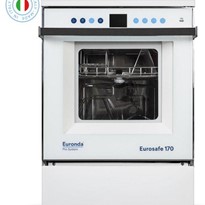
Following the manufacturer’s instructions carefully is thekey to getting the most out of these technologies. Before startingthe thermodisinfector, the instruments must be opened and placed in thebaskets or perforated cassettes without overlapping; the jet nozzles mustremain unobstructed to ensure uniform washing and rinsing. For some typesof instruments, such as dental chair aspirators, dedicated injectors oraccessories must be used. It is also important not to leave the materialin the chamber at the end of the cycle as residual moisture promotesoxidation. If it is not possible to bag items immediately, it isbetter to leave the door open to prevent steam accumulation. The sameprinciples apply to ultrasonic tanks: always use the appropriateperforated basket, arrange the instruments in a single layer and openforceps and scissors so that the articulated areas are exposed to theultrasonic action. Place the heaviest instruments on the bottom and themore fragile ones on top, making sure they are fully submerged in thesolution. This careful positioning ensures uniform cavitation and preventsdamage to the transducers. Standardizing these operations and trainingstaff not only ensures repeatable results, but also protects instruments,extends the life of equipment, and reduces risks for operators.
When loaded correctly and equipped with the rightaccessories, thermodisinfectors and ultrasonic tanks areindispensable tools for safe, effective cleansing and disinfectionthat complies with guidelines.
Mistake 5: It’s not just about instruments: are youneglecting to disinfect the dental chair and work surfaces?
The problem
Simplydisinfecting reusable instruments while neglecting surfaces, chairs, lamps, andthe hydraulic circuit of the dental chair means that protocols are onlypartially followed. The entire environment must be considered potentiallycontaminated and treated accordingly, because pathogens can survive for weekson surfaces and in water systems.
In Italy, the ISS notes thatenvironmental cleaning is part of the Standard Precautions and is essential forpreventing healthcare-associated infections. But there are also specificguidelines at the European level: the guidelines of the European Centrefor Disease Prevention and Control (ECDC) for dental practices state that“frequently touched surfaces should be regularly cleaned with a neutraldetergent” and that, in the event of possible contamination, decontaminationmust be carried out with a virucidal disinfectant or with solutions of0.05-0.1% sodium hypochlorite or 70% ethanol. Ignoring theserecommendations means exposing patients and operators to unnecessary risks.
The solution
Thedisinfection protocol must be designed based on risk levels, not on routinepractices. It is not enough to ask “have we disinfected theinstruments?”, the right question is “have we treated all thehigh-risk areas?”. This includes worktops, the dental chair, lamps,handles, frequently touched areas, and hydrauliccircuits. Disinfectants should be chosen according to their intended useand must comply with European requirements for biocidal products (EURegulation 528/2012): Non-invasive surfaces require products with a mediumor low spectrum of action, while hydraulic circuits require specific proceduresto prevent legionella. By dividing the process into distinct stages andadjusting times, dilutions, and frequency of use, an effective and repeatableprocess can be achieved that complies with both Italian guidelinesand European regulations. For surfaces on non-invasive medical devices,the Euronda Sanifizer line is a suitable, ready-to-use solution.
The role of Euronda Sanifizer: efficacy and control indisinfection
It is precisely during the disinfection phase that themajority of operational variability occurs. This includes inaccuratedilutions, failure to follow time guidelines, and inappropriate productchoices.
The Euronda Sanifizer line was created toreduce this variability, offering solutions developed specifically for thediverse needs of dental practices: from instrument cleaning to cleaningthe surfaces of non-invasive Medical Devices.
Formulations that are effective at low concentrations, withhigh material compatibility, and featuring clear dosage systems allow you towork in a safer and more consistent way. This means that disinfectionceases to be a stage that is open to operator interpretation and becomes acontrolled, repeatable, and standardized step.
Quick checklist for instrument disinfection that can beposted in the sterilization room
Did you pre-treat the instruments immediately after use?
Are you using the right disinfectant at the correct dilution rate?
Did you read the disinfectant label before using it?
Have you loaded the disinfector or ultrasonic tank correctly?
Have you disinfected the dental chair and surfaces?
FAQ – Frequently asked questions about disinfection
What is the difference between disinfection andsterilization?
Disinfection significantly reduces the microbial load onsurfaces or devices, but does not guarantee the total elimination ofall microorganisms. Sterilization, on the other hand, is the process thatmakes a device sterile and therefore suitable for subsequent useaccording to its intended purpose. In a dental practice, these two stepsare not interchangeable. They are part of a single process and must beapplied correctly according to the type of device and the level of risk.
How do you choose the most suitable disinfectant?
The choiceshould not be based solely on microbiological efficacy, but on a combination offactors: spectrum of action, contact time, compatibility with materials,method of use (manual cleaning, ultrasonic tank, multifunctional tank) andoperator safety. The right product is one that can be integratedeffectively and reliably into the practice processes.
How important is it to follow the manufacturer'sinstructions?
It is extremely important. The manufacturer’sinstructions indicate how a particular device should be treatedwithout compromising its safety, functionality, and durability. Ignoringthe instructions or replacing them with in-house practices means exposingyourself to process errors and, in some cases, even damaging the deviceitself. A correct protocol always starts from the instructions.
Sources
Source ISS: for Standard Precautions and environmental cleaning.
Source ECDC: for surfaces, neutral detergent, and virucidal disinfectants.
EU Regulation 528/2012: for the use of biocides.
Spaulding: for classification of the risk level of instruments.
SDS and manufacturer’s instructions: for the safe and correct use of disinfectants and devices.
ICONA is a supplier of quality healthcare equipment togovernment, corporate and private practices across Australia with after salessupport available in every state.
For more information, contact ICONA on 1300 442 662 or emailus [email protected]

-160x160-state_article-rel-cat.png)