

There is a quiet transformation happening in veterinary imaging. Practices that once referred every neurological case, every soft tissue mass, every joint pathology workup — cases that walked out the door and into a specialist centre — are now keeping those patients in-house. The catalyst is not new technology. It is the refurbished equipment market finally coming of age.
For most of the last two decades, MRI in veterinary medicine was the exclusive domain of university hospitals and large referral centres. The economics were simply prohibitive: a new veterinary MRI system could cost upward of half a million dollars before a single patient had been scanned, and that figure did not include the RF shielded room, the installation, the commissioning, or the software licensing. For the private practice owner, the numbers rarely stacked up.
What has changed is the supply of high-quality, well-maintained pre-owned systems — and, critically, the emergence of specialist dealers with the technical expertise to properly assess, document, and support them. The refurbished veterinary MRI market is no longer the wild west it once was. Done correctly, buying pre-owned is not a compromise. It is a strategy.
The Myths — and the Reality
Resistance to pre-owned medical equipment is often rooted in three concerns: reliability, image quality, and ongoing support. Each deserves an honest response.
On reliability:a well-maintained MRI system in veterinary use accumulates a fraction of the scan volume of its human-medicine equivalent. Veterinary MRI suites typically perform ten
to thirty scans per week — human radiology departments run systems at three to five times that throughput. The consequence is that pre-owned veterinary MRI systems are often
mechanically younger than their manufacturing date suggests. Components that drive failure in high-throughput human systems have far more remaining service life in lightly-used
veterinary configurations.
On image quality: for the permanent-magnet low-field systems that dominate veterinary MRI, image quality is largely a function of coil design and pulse sequence optimisation — not
field strength or age of manufacture. A well-maintained 0.3T system running appropriate sequences produces diagnostically excellent neurological and musculoskeletal images. The
clinical evidence base in veterinary MRI was built largely on systems of exactly this specification.
On support: this is where the choice of supplier matters enormously — and where working with a specialist dealer rather than a private seller or general equipment broker becomes
critical.
The question is no longer whether a private veterinary practice can afford MRI — it is whether it can afford to keep referring those cases away.
Six Reasons Pre-Owned Wins
01 Capital cost — 40 to 70% lower
A professionally refurbished veterinary MRI system costs a fraction of new. That freed capital can fund staffing, fit-out, or additional equipment — dramatically altering the financial profile of the investment.
02 Faster break-even
Lower acquisition cost means your break-even scan volume falls sharply. Practices reaching 8–12 MRI scans per week typically find a pre-owned system reaches profitability within the first 12 months.
03 Proven, de-risked technology
Pre-owned systems have passed through their commissioning period. Manufacturing variances, early-life software issues, and design defects are documented and resolved. You benefit from years of in-field reliability data.
04 Immediate availability
New MRI installations carry lead times of 12–18 months from order to first scan. Pre-owned systems can be inspected, purchased, and scanning within weeks — months of lost revenue avoided.
05 Complete packages available
The best pre-owned deals include RF shielded rooms, full coil sets, workstations, and accessories — elements that add substantially to the cost of new installations. Complete packages eliminate procurement complexity.
06 Environmental responsibility
Extending the working life of high-quality medical equipment avoids the considerable carbon cost embedded in manufacturing a new system. Refurbished is the sustainable choice — increasingly relevant to clients and regulators alike.
By the numbers :
- 40–70% typical saving vs new purchase price
- < 12 months typical break-even at moderate scan volumes
- Weeks to first patient scan vs 12–18 months for new
The Clinical Case — What MRI Changes for Your Practice
The diagnostic applications of MRI in small animal practice are well-established. Neurological disease — brain tumours, encephalitis, myelopathy, disc disease — represents the highest-volume indication and the one where MRI is most clearly indispensable. CT can rule out many conditions; MRI defines them. The difference in clinical confidence between a presumptive neurological diagnosis and an MRI-confirmed one is significant, both for the patient and for the client's experience of care.
Beyond neurology, MRI increasingly underpins workup of soft tissue masses, nasal disease, inner ear pathology, joint disease in complex cases, and pituitary evaluation. These are cases that most private practices currently refer. Each referral represents not only lost procedure revenue but the erosion of a client relationship that may not return.
In-house MRI also enables same-day clinical decision-making. An animal presenting acutely with neurological signs can be imaged, diagnosed, and have a treatment plan in place within hours of admission — without the stress and anaesthetic risk of transport to a referral centre. For the critically ill patient, this is not a convenience. It is a meaningful clinical advantage.
Why the Supplier Matters as Much as the System
The single most important variable in a pre-owned MRI purchase is not the system — it is the party selling it. The difference between a specialist refurbishment dealer and a general equipment broker or private vendor is the difference between a documented, inspected, supported asset and an unknown quantity.
A credible supplier will provide comprehensive photographic documentation of every system component, verified software licence status with confirmation of permanently licensed
options, full service history where available, and clear documentation of any replaced components. They will facilitate on-site inspection by a qualified engineer prior to purchase, and they will have established logistics for system decommissioning, transport, and recommissioning at the destination site.
Post-sale support infrastructure matters equally. What happens when a coil develops a fault six months after installation? Who manages the relationship with the manufacturer's service organisation? Who holds spare parts inventory? These are not hypothetical questions — they are the real operational questions that determine whether a pre-owned MRI investment succeeds or fails.
Why EVERX
EVERX is a specialist in pre-owned medical imaging equipment — not a generalist broker. Every system offered by EVERX is professionally documented, photographed in detail, and made available for on-site inspection before any commitment is made. Software licence status is verified and disclosed. Component condition is assessed by qualified engineers.
For buyers, this means full visibility into exactly what they are purchasing — no surprises after delivery.
EVERX operates across the full imaging modality spectrum — MRI, CT, angiography, and more — which means the team understands the specific technical demands of veterinary MRI procurement. From RF shielded room logistics to coil compatibility, from software commissioning to post-installation service pathways, EVERX provides specialist guidance that a general equipment dealer cannot match.
For practices considering their first MRI investment, EVERX also provides the market context to make a sound decision — including honest guidance on which systems offer the best value and clinical performance for a given budget and scan volume expectation.?
The Esaote Vet-MR Grande — A Benchmark Example
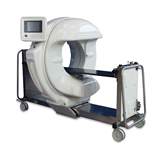
For practices seeking a starting point, the Esaote Vet-MR Grande eXP represents the category standard. Purpose-built for veterinary imaging — not adapted from a human medical system — the Grande uses a permanent magnet design that eliminates the cryogen costs, quench risks, and ongoing maintenance complexity of superconducting systems. Its open-sided geometry gives full lateral access to the patient throughout scanning, a meaningful advantage for monitoring anaesthetised animals.
EVERX currently has a Vet-MR Grande eXP available, complete with its original RF shielded modular room, full coil set, and dedicated Esaote workstation. It is available for inspection now. Systems of this specification, in this condition, with a complete infrastructure package, do not remain available for long.
Enquire with EVERX
EVERX specialises in pre-owned veterinary and medical imaging equipment. To discuss current MRI inventory, arrange a system inspection, or request technical documentation, contact the EVERX team directly.