How to use this page
How this page helps you choose the right MRI scanner
Choosing the right MRI scanner comes down to a handful of decisions. Here we walk you through the ones that matter most to help you make a choice that meets your needs and your budget, without any expensive surprises after delivery. When you're ready, use our popular Get Quotes option to connect with verified Australian suppliers so you can compare quotes and buy with confidence.
Common setups
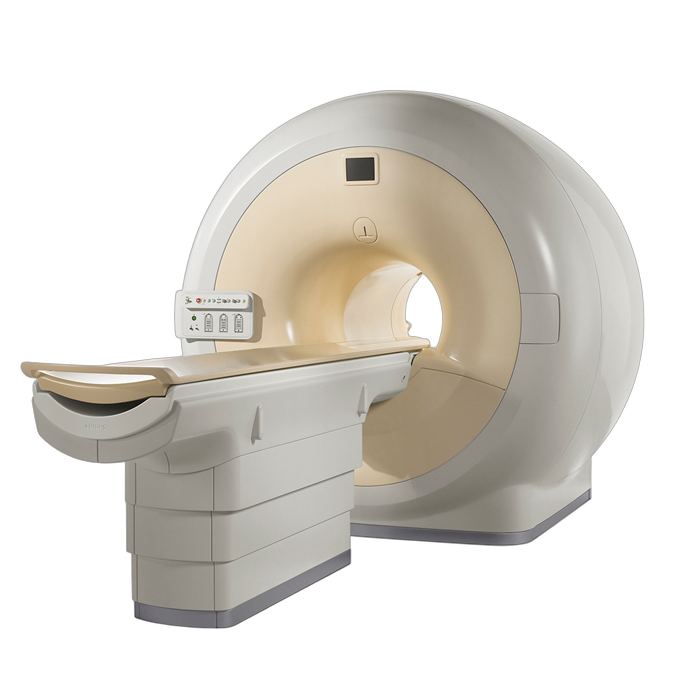
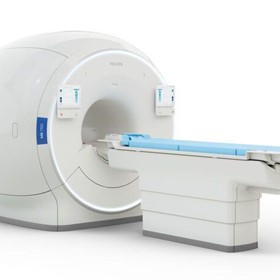
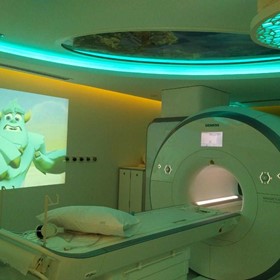
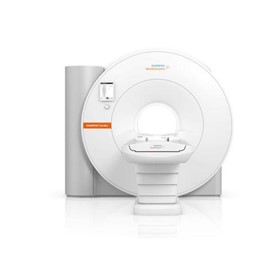
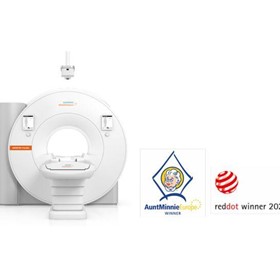
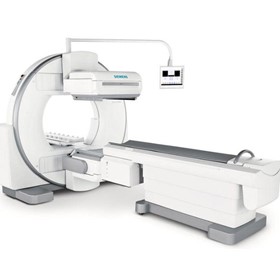
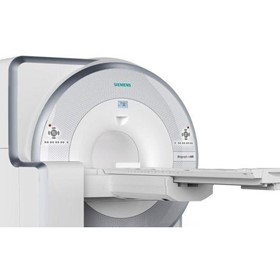
Three common MRI scanner setups
Cost breakdown
What an MRI scanner costs, by field strength and condition
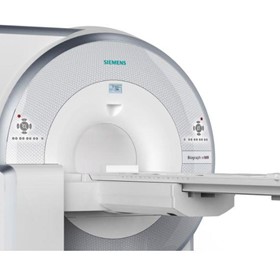
An MRI scanner in Australia runs from about $150,000 for a refurbished low-field or open system to $3 million or more for a new wide-bore 3 tesla scanner. You may see the same machine described as an MRI machine, an MRI system, a magnetic resonance imaging unit, a 1.5T or 3T, or an open or wide-bore MRI. The machine is rarely the full cost: the room, shielding, helium, and service contract often add as much again.
| Field strength and condition | Price AUD, indicative, before GST | What changes the price |
|---|---|---|
| Low-field or open (0.2T to 0.4T) | $150,000 to $400,000 | Smaller magnet and simpler siting keep the price down |
| Refurbished 1.5 tesla (1.5T) | $300,000 to $700,000 | Age, included coils, and remaining magnet life |
| New 1.5T | $1.0 million to $1.8 million | Current software, full warranty, factory lead time |
| New 3 tesla (3T), wide-bore | $1.8 million to $3 million or more | Stronger magnet, heavier shielding, larger install |
New or used
Buying a used MRI scanner, new, or refurbished
The trade-offs between new, used, and refurbished sit in warranty, magnet life, and software, not image quality. MRI magnet platforms stay clinically useful for many years, but software, coils, service support, and sequence availability can date faster than the magnet itself.
Running costs
What an MRI scanner costs to run and own
Beyond the purchase price, an MRI carries real annual costs, and they differ sharply from one system to the next.
| Cost area | What to expect AUD, per year | What changes the cost |
|---|---|---|
| Helium and cryogen | Near zero for zero boil-off; up to $30,000 or more on a classic magnet | Zero boil-off versus classic magnet |
| Service contract | $10,000 to $100,000 depending on coverage | Field strength, age, and coverage level |
| Power and chiller | A material annual line; idle time still draws power | Duty cycle and cooling type |
| Site works (amortised) | $250,000 to $600,000 one-off, spread over the system life | Shielding and structural scope |
Siting
What it takes to install an MRI scanner on your site
Site readiness decides whether a given magnet will even work in your space. Confirm it before you commit to a system, because a failed site can rule out a 3T or force costly building work.
| Site requirement | Why it matters |
|---|---|
| Radiofrequency (RF) shielding | A Faraday cage keeps outside signals out, so your images stay clean |
| Magnetic shielding (5 gauss line) | Steel, or an actively shielded magnet, keeps the fringe field inside the room and away from hallways and the floors above or below |
| Quench pipe and cryogen vent | Safely vents helium gas outside if the magnet quenches |
| Floor loading and access | The magnet is heavy and large; the path in and the slab must take it |
| Cooling, air, and power | Stable temperature, humidity, and a dedicated supply keep the magnet healthy |
Compliance
TGA, Medicare eligibility, and MRI safety explained
Three checks matter when you buy: that the system is legal to supply, whether it can bill Medicare, and how it is regulated for safety.
Legal to supply. MRI systems supplied commercially in Australia generally need to be included on the ARTG under an Australian sponsor unless a lawful exemption applies. Ask for the ARTG entry or lawful supply pathway for the exact system being quoted, and check it with the Therapeutic Goods Administration (TGA).
Medicare eligibility is changing. From 1 July 2025, equipment-based MRI licences became practice-based, and from 1 July 2027, subject to legislation, the licence requirement is set to be removed so existing and new MRIs become fully Medicare-eligible. See the Department of Health and Aged Care.
Safety sits with the magnet. MRI is non-ionising, so it does not need a state radiation-use licence the way a CT or X-ray unit does. The Australian Radiation Protection and Nuclear Safety Agency (ARPANSA) covers static-field and radiofrequency exposure and the 5 gauss boundary.
Before you quote
What to lock in before you request MRI quotes
Get these requirements clear upfront and suppliers can provide accurate MRI scanner quotes the first time, rather than making assumptions.
| 1 | Site survey. Get a radiofrequency and magnetic survey of your room so you know which magnets fit. |
| 2 | Field strength. Decide low-field, 1.5T, or 3T against your caseload, not the brochure. |
| 3 | Bore size. Choose a 60cm or a 70cm wide bore based on your patient mix. |
| 4 | Coils and channels. List the coils and channel count your studies need; they drive speed and price. |
| 5 | Condition and magnet life. Set new, refurbished, or used, and ask for remaining magnet and cold-head life. |
| 6 | ARTG and sponsor. Confirm the unit is on the ARTG and supplied by an Australian-based sponsor. |
| 7 | Medicare position. Confirm where your accredited practice sits on eligibility before you assume a rebate. |
| 8 | Software and licences. Check which sequences and software licences are included, and the upgrade path. |
| 9 | Service and helium. Agree the service level and whether the magnet is zero boil-off or needs refills. |
| 10 | Install and move timeline. Map the build, rigging, and, if relocating, the de-install dates. |
Finance options
Finance options for your MRI scanner purchase
An MRI scanner is a large upfront cost, and the suite build adds to it. To spread that into a monthly repayment, many buyers look at equipment finance alongside the quote comparison. What finance looks like for your practice comes down to the answers below.
| Finance question | What it helps you decide | Why it matters |
|---|---|---|
| What could the monthly repayment be? | Whether the machine fits your monthly cash flow before committing to a quote. | Most MRI scanners sit in a price range where the monthly repayment is easier to weigh against throughput than the upfront cost alone. |
| Am I likely to get approved? | Whether your business, trading history, and the machine's value are financeable. | MedicalSearch finance works across a panel of lenders, which can improve the chance of finding a suitable approval pathway. |
| Which finance structure suits the purchase? | Whether to compare options such as chattel mortgage, lease, rental, or low-deposit finance. | The right structure can affect ownership, monthly cost, cash flow, and how quickly you can move ahead. |
Finance calculator
Estimate my repayment
Adjust the sliders to estimate your MRI scanner repayments. Speak with our team for an exact quote based on your profile.
Compare quotes and finance options for MRI scanners.
Need finance before choosing an MRI scanner?
Check indicative MRI scanner finance options in under a minute, with no obligation.
Common questions
Common MRI scanner questions buyers ask before quoting
Quick answers to the most-searched questions about buying an MRI scanner and how MedicalSearch works.
Why use MedicalSearch to buy an MRI scanner?
MedicalSearch helps you compare multiple reputable Australian suppliers with a single enquiry, saving you time and effort. Instead of contacting suppliers individually, you can compare suitable devices, technology, compliance requirements, service support, and ongoing consumables in one place. This helps you find the right MRI scanner for your treatments while avoiding costly mistakes and making a more informed purchasing decision.
How much does an MRI scanner cost?
In Australia, a refurbished low-field or open MRI runs about $150,000 to $400,000, a refurbished 1.5T about $300,000 to $700,000, a new 1.5T about $1.0 million to $1.8 million, and a new wide-bore 3T about $1.8 million to $3 million or more, before GST. Site works, helium, and the service contract add to that.
Is it worth buying a used MRI scanner?
Often yes. A used MRI scanner for sale can be 50% to 80% below new, and a well-kept magnet stays clinically useful for many years. Software, coils, sequence availability, and service support date faster than the magnet, so confirm those plus remaining magnet and cold-head life, zero boil-off status, and the de-install and re-install plan if it is being moved.
Is an MRI scanner Medicare-eligible, and is that changing?
Yes, it is changing. From 1 July 2025, MRI Medicare licences became practice-based rather than tied to the machine, and from 1 July 2027, subject to legislation, the Commonwealth licence requirement is set to be removed so existing and new MRIs become fully Medicare-eligible. Confirm where your accredited practice sits before you assume a rebate.
What site works are needed before installing an MRI scanner?
A purpose-built suite with radiofrequency shielding, magnetic shielding for the 5 gauss line, a quench vent, adequate floor loading, and stable power and cooling. A new suite commonly runs $250,000 to $600,000 or more and takes 12 to 20 weeks to build, plus 2 to 4 weeks for rigging, install, and calibration.
How much helium does an MRI use, and what does servicing cost?
It depends on the magnet. A zero boil-off magnet uses almost no helium, while an older classic magnet can need refills that run into the thousands a year. Service contracts run about $10,000 to $100,000 a year depending on field strength, age, and coverage level.
What is the difference between a 1.5T and a 3T MRI?
A 3T magnet has twice the field strength of a 1.5T, giving more signal for finer detail and faster detailed studies. For routine musculoskeletal, neuro, and body caseloads, 1.5T is the clinical standard. Choose 3T for fine neuro, cardiac, functional MRI (fMRI), and research work, and an open or wide-bore system for claustrophobic and larger patients. A 3T costs more to buy, site, and run.
Do I need a radiation licence to operate an MRI scanner?
MRI does not use ionising radiation, so it is not licensed like an X-ray or CT radiation apparatus. You still need MRI safety controls for static magnetic fields, radiofrequency exposure, implants, access control, and the 5 gauss boundary, and your facility may require local MRI safety policies or credentialing. ARPANSA publishes the relevant exposure guidance.
How long does finance pre-approval take?
Equipment finance pre-approval is usually quick, often within 1-2 business days once you provide basic business and financial details. Pre-approval lets you compare quotes knowing your monthly cost and borrowing capacity, without committing to a purchase.
What documents do I need to apply for equipment finance?
For most equipment finance under a set threshold, lenders ask for limited paperwork: your business ABN and trading history, recent bank statements, and details of the MRI scanner being financed. Larger amounts can need business financials or tax returns. MedicalSearch finance works across a panel of lenders, so the exact requirements vary by amount and lender.
Why MedicalSearch
Why buyers choose MedicalSearch
Helping Australian medical buyers compare suppliers since 2011.