
Key takeaways
- Entry-level diode laser (new, 2026): $15,000-$40,000 AUD for single-wavelength portable or compact floor-standing units suited to start-up clinics.
- Mid-range diode or alexandrite (new): $40,000-$90,000 AUD for dual or triple-wavelength platforms with larger spot sizes and integrated cooling.
- High-spec multi-wavelength platform (new): $90,000-$180,000+ AUD for premium platforms combining 755 nm, 810 nm and 1064 nm with high repetition rates and advanced skin cooling.
- Annual running costs: $5,000-$20,000 covering handpiece refurbishment, consumables, calibration and servicing - handpiece replacement alone accounts for 40-60% of ongoing cost.
- If your clinic treats fewer than 20 clients per week: an entry-level single-wavelength diode at $15,000-$40,000 delivers clinical results without the handpiece cost burden of a multi-platform system.
- Revenue per treatment: $80-$300 per session depending on body area - a mid-range machine treating 15-25 clients per week typically reaches payback in 8-14 months.
- TGA registration: All laser hair removal devices used in Australian clinics must be listed on the Australian Register of Therapeutic Goods (ARTG) - purchasing an unregistered device creates compliance and insurance risk.
Professional laser hair removal machine prices in Australia: What clinics actually pay in 2026
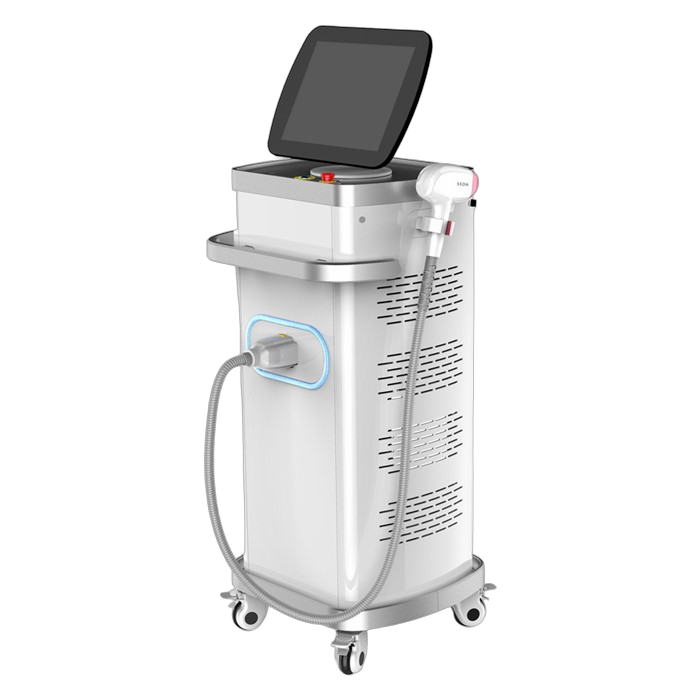
Professional laser hair removal is the highest-demand aesthetic treatment in Australian clinics. The technology has consolidated around diode (810 nm), alexandrite (755 nm) and Nd:YAG (1064 nm) wavelengths, with multi-wavelength platforms now dominating the mid and high-spec market because they treat a wider range of skin types without requiring a second machine.
This guide breaks down purchase price, running costs, TCO, depreciation and revenue modelling for professional laser hair removal machines in Australia so clinic owners and practice managers can build a complete cost model before going to approval. To compare pricing from verified Australian suppliers, get quotes for professional laser hair removal machines on MedicalSearch.
Operations where dedicated hair removal lasers are the standard specification:
- Cosmetic clinics and medi-spas where hair removal is the primary or highest-volume service
- Dermatology practices offering laser hair removal alongside clinical skin services
- Multi-location franchise clinics standardising equipment across sites
- Day spas and beauty clinics upgrading from IPL to laser for improved efficacy on darker skin types
Choose your laser configuration
Before costing anything, confirm which wavelength configuration suits your client base. Your choice here sets your price bracket, treatment range and handpiece cost profile.
Type | Key Spec | Best For |
|---|---|---|
Single-wavelength diode (810 nm) |
Most versatile single wavelength, Fitzpatrick I-V |
Start-up clinics, high-volume hair removal only, cost-conscious operations |
Alexandrite (755 nm) |
Fastest melanin absorption, Fitzpatrick I-III |
Clinics with predominantly fair-skinned client bases, fine hair treatment |
Dual/triple-wavelength platform |
755 nm + 810 nm + 1064 nm, Fitzpatrick I-VI |
Multi-ethnic client bases, clinics treating all skin types, premium positioning |
If your client base is predominantly Fitzpatrick I-III and hair removal is your only laser service, a single-wavelength diode or alexandrite covers 80-90% of presentations. If you treat Fitzpatrick IV-VI regularly, a platform with 1064 nm Nd:YAG capability is required for safe treatment on darker skin.
Single-wavelength diode suits you if your clinic is starting out or hair removal volume is under 20 clients per week. The lower purchase price and simpler handpiece inventory keep your break-even point low while you build client volume.
Multi-wavelength platform suits you if your clinic treats diverse skin types or you want to offer hair removal as part of a broader aesthetic menu. The higher capital cost is offset by the ability to treat every walk-in without referring out darker skin types.
Evaluate the key specifications
With your wavelength configuration confirmed, these are the specs that determine whether a given machine fits your clinical workflow and revenue targets.
Specification | Typical Range | Buyer Consideration |
|---|---|---|
Spot size |
9-24 mm |
Larger spot sizes treat faster on large body areas (legs, back) - a 24 mm spot covers 4 times the area per pulse of a 12 mm spot |
Repetition rate |
1-10 Hz |
Higher repetition rates reduce treatment time per client - critical for clinics booking 15-minute appointment slots |
Fluence range |
10-80 J/cm² |
Wider fluence range provides flexibility across skin types and hair thickness |
Cooling system |
Contact, air or cryogen spray |
Integrated contact cooling reduces consumable costs compared to cryogen-dependent systems |
Handpiece shots |
5-30 million shots per handpiece |
Higher shot count extends handpiece life - replacement handpieces cost $3,000-$15,000 each |
Power supply |
15A or 20A single phase |
High-powered platforms may require a dedicated 20A circuit - confirm your treatment room supply |
Understand the full cost breakdown (2026 prices)
Purchase price is only part of the picture - most cost models that fail at business case stage have missed the handpiece and consumable layer. Here is the full breakdown.
Category | Price Range (AUD) | Typical Configuration |
|---|---|---|
Entry-level new (single diode) |
$15,000-$40,000 |
810 nm, single handpiece, portable or compact floor unit |
Mid-range new (dual/triple wavelength) |
$40,000-$90,000 |
755 + 810 nm or 755 + 810 + 1064 nm, integrated cooling, larger spot sizes |
High-spec new (premium platform) |
$90,000-$180,000+ |
Triple wavelength, high rep rate, multiple handpiece options, advanced cooling |
Used/refurbished |
$8,000-$60,000 |
Condition-dependent - check remaining handpiece shots, calibration status and ARTG listing |
Handpiece replacement |
$3,000-$15,000 per handpiece |
Required every 5-30 million shots depending on platform - the single largest ongoing cost |
Annual service and calibration |
$2,000-$6,000/year |
Includes optical alignment, software updates, safety checks and cooling system inspection |
Five-year TCO on a mid-range triple-wavelength platform sits at $60,000-$140,000 including purchase, handpiece replacements, servicing and consumables. The most common mistake is ignoring handpiece replacement cost - a clinic treating 20 clients per day will exhaust a 10-million-shot handpiece in 12-18 months, adding $3,000-$15,000 per replacement cycle. For a mid-range machine at $40,000-$90,000, get quotes for professional laser hair removal machines to compare pricing from verified Australian suppliers.
A clinic charging $150-$250 per session and treating 15-25 clients per week generates $120,000-$325,000 in annual hair removal revenue. At that volume, a mid-range machine reaches payback in 8-14 months. For clinics wanting hair removal alongside skin rejuvenation and vascular treatments, a multi-platform cosmetic laser may deliver better revenue per square metre. See the cosmetic laser pricing guide for the full comparison.
Plan the asset (depreciation and financing)
The ATO effective life for medical and cosmetic laser equipment is 10 years. Under diminishing value, the depreciation rate is 20%; prime cost is 10% per annum. The instant asset write-off threshold for 2025-26 is $20,000.
Clinics with unproven client volume should consider equipment finance at $800-$3,000/month for mid-range platforms, preserving working capital for marketing and fit-out during the client acquisition phase.
Evaluate suppliers
You are ready to go to market. Use this checklist to assess each supplier against the same criteria.
Factor | What to Ask |
|---|---|
ARTG listing |
Is this device currently listed on the ARTG? Provide the ARTG number. |
Handpiece shot count |
How many shots does each handpiece deliver and what is the replacement cost? |
Handpiece availability |
Are replacement handpieces stocked in Australia or imported to order? |
Annual service cost |
What does an annual service include and what is the fixed cost? |
Training |
Is operator training included in the purchase? How many staff can be trained? |
Clinical protocols |
Do you provide treatment protocols for all Fitzpatrick skin types this machine covers? |
Warranty |
What is the warranty period and does it cover handpiece and cooling system components? |
Loaner availability |
Do you provide a loaner machine during warranty repairs so my clinic stays operational? |
Finance |
Do you offer equipment finance or lease-to-own arrangements? |
Emergency response |
What is your callout or remote support response time in my state? |
Software updates |
Are firmware and treatment parameter updates included or charged separately? |
Frequently asked questions
What should an Australian clinic budget for a professional laser hair removal machine in 2026?
Entry-level single-wavelength diode lasers start at $15,000-$40,000, mid-range dual or triple-wavelength platforms run $40,000-$90,000, and premium multi-handpiece systems cost $90,000-$180,000+. Add $5,000-$20,000 per year for handpiece replacement, servicing and consumables.
At what client volume does a dedicated hair removal laser justify the capital investment?
A mid-range machine treating 15-25 clients per week at $150-$250 per session typically reaches payback in 8-14 months. Below 10 clients per week, an entry-level unit or a multi-platform cosmetic laser that also generates revenue from other treatments may deliver a faster return.
How often do laser handpieces need replacing and what do they cost?
Handpieces last 5-30 million shots depending on the platform, with replacement cost ranging from $3,000 to $15,000 each. A clinic treating 20 clients per day will typically exhaust a 10-million-shot handpiece in 12-18 months.
What TGA and ARTG requirements apply to laser hair removal machines in Australia?
All professional laser hair removal devices must be listed on the Australian Register of Therapeutic Goods (ARTG) before use in clinical settings. Purchasing an unregistered device creates compliance risk with state health regulators and may void professional indemnity insurance.
What matters most
- Professional laser hair removal machines cost $15,000-$180,000+ in Australia depending on wavelength count, spot size and platform capability
- Handpiece replacement is the single largest ongoing cost - budget $3,000-$15,000 per handpiece every 12-24 months at moderate clinical volume
- Five-year TCO on a mid-range platform runs $60,000-$140,000 including purchase, handpieces, servicing and consumables
- Payback at 15-25 clients per week sits at 8-14 months - build this into your business case with conservative volume assumptions
- ARTG listing is non-negotiable - an unregistered device creates compliance and insurance risk from day one
- If you are within 3 months of purchasing, get quotes now to compare handpiece costs, warranty terms and training packages across suppliers
Most clinic owners shortlist 2-3 machines after comparing quotes on handpiece cost and total cost of ownership.
Do not waste time contacting suppliers individually. MedicalSearch gives you direct access to verified Australian laser hair removal machine suppliers - where medical and aesthetic buyers request and compare multiple quotes so they can buy with confidence.
- Get quotes for professional laser hair removal machines - contact multiple verified suppliers with a single enquiry
- Compare models - filter by wavelength, spot size and region
- Contact suppliers directly - speak to specialists who service your state
→ Get and compare laser hair removal machine quotes now →