
Key takeaways
- Wavelength choice is the primary decision: 810 nm diode covers Fitzpatrick I-V, 755 nm alexandrite is fastest on fair skin (I-III), and 1064 nm Nd:YAG is required for safe treatment on Fitzpatrick V-VI.
- If your client base includes Fitzpatrick IV-VI regularly: a platform with 1064 nm Nd:YAG capability is required - single-wavelength diode or alexandrite alone creates clinical risk on darker skin.
- Spot size drives treatment speed: a 24 mm spot covers four times the area per pulse of a 12 mm spot - specify the largest spot size your clinical protocols support.
- ARTG listing is non-negotiable: all professional laser devices must be listed on the Australian Register of Therapeutic Goods before clinical use - an unregistered device voids insurance and creates regulatory risk.
- Operator licensing varies by state: NSW, VIC and QLD each set different minimum qualifications - confirm requirements and training lead times before purchasing.
- Handpiece cost is the hidden variable: replacement handpieces cost $3,000-$15,000 each - for the full running cost and TCO breakdown, see the price guide.
- Price range (2026): $15,000-$180,000+ depending on wavelength count and platform capability.
What every clinic owner should know before buying a laser hair removal machine (2026)
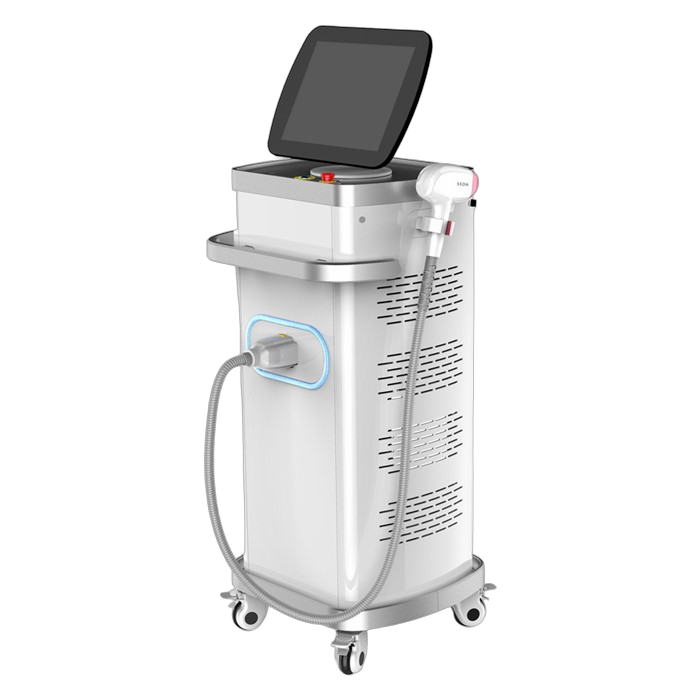
A professional laser hair removal machine is a revenue-generating capital asset, but the decision that determines whether it performs is wavelength selection - not brand, not price. A machine that cannot safely treat the skin types walking through your door either limits your addressable market or creates clinical risk.
This guide covers wavelength configuration, key specifications, compliance requirements, operator licensing and supplier evaluation for professional laser hair removal machines in Australia. For full pricing tiers, running costs, five-year TCO and revenue modelling, see the laser hair removal machine price guide. To compare pricing from verified suppliers, get quotes for laser hair removal machines on MedicalSearch.
Operations where dedicated hair removal lasers are the standard specification:
- Cosmetic clinics and medi-spas offering hair removal as a core service
- Dermatology practices with aesthetic treatment rooms
- Multi-site franchise clinics standardising equipment and protocols
- Beauty clinics upgrading from IPL to laser for improved results on coarse or dark hair
Choose your wavelength configuration
Before evaluating suppliers, confirm which wavelength configuration matches your client demographic. Your choice here determines your treatable skin type range, treatment speed and price bracket.
Wavelength | Key Spec | Best For |
|---|---|---|
810 nm diode |
Fitzpatrick I-V, deepest penetration for coarse hair |
General-purpose clinics, start-ups, high-volume single-service operations |
755 nm alexandrite |
Fitzpatrick I-III, highest melanin absorption |
Clinics with predominantly fair-skinned clients, fine hair presentations |
1064 nm Nd:YAG |
Fitzpatrick IV-VI, safest on dark skin |
Multi-ethnic client bases, darker skin types, ingrown hair treatment |
Triple wavelength (755+810+1064) |
Fitzpatrick I-VI, all skin types in one platform |
Full-service clinics treating diverse demographics, premium positioning |
If 80%+ of your clients are Fitzpatrick I-III, a single-wavelength diode or alexandrite covers most presentations. If you regularly treat Fitzpatrick IV-VI, specify a platform with 1064 nm capability.
Single-wavelength suits you if your clinic is building volume on hair removal as a single service and your client base is predominantly fair-skinned. The lower purchase price keeps break-even achievable at 10-15 clients per week.
Multi-wavelength suits you if your clinic is in a multi-ethnic area or you want the flexibility to treat every walk-in. The most common mistake is buying a single-wavelength machine for a diverse client base, then having to refer out 20-30% of consultations - that referral revenue loss typically exceeds the price difference within 12 months.
Evaluate the key specifications
With your wavelength configuration confirmed, these are the specs that determine clinical performance and treatment economics.
Specification | Typical Range | Buyer Consideration |
|---|---|---|
Spot size |
9-24 mm |
Larger spots treat large body areas faster - a 24 mm spot covers four times the area of a 12 mm |
Repetition rate |
1-10 Hz |
Higher rates reduce appointment time - critical for 15-minute booking slot models |
Fluence range |
10-80 J/cm² |
Wider range provides treatment flexibility across hair types and skin tones |
Cooling system |
Contact, air, cryogen |
Integrated contact cooling eliminates consumable cost; cryogen adds $500-$2,000/year |
Handpiece shot life |
5-30 million shots |
Higher count reduces per-treatment cost - for full handpiece cost modelling see the price guide |
Power supply |
15A or 20A single phase |
High-powered platforms may require a dedicated 20A circuit |
Confirm your budget range
Laser hair removal machines cost $15,000-$180,000+ in Australia depending on wavelength count and platform capability. For the full pricing table with per-tier configurations, running cost breakdown, five-year TCO and revenue modelling, see the price guide. For a mid-range platform at $40,000-$90,000, get quotes for laser hair removal machines to compare pricing from verified Australian suppliers.
Plan the asset
The ATO effective life for medical laser equipment is 10 years. For full depreciation rates, write-off thresholds and equipment finance framing, see the price guide.
Australian compliance requirements
Laser hair removal machines in Australian clinical settings must meet these requirements:
- TGA registration: all professional laser devices must hold a current listing on the Australian Register of Therapeutic Goods (ARTG) - verify the ARTG number before purchasing. An unregistered device creates compliance risk with state health regulators and may void professional indemnity insurance.
- AS/NZS IEC 60825 laser safety standard applies to all Class 3B and Class 4 laser devices used in clinical settings
- Operator licensing varies by state: NSW requires licensing through Health NSW, VIC through the Radiation Management Unit, and QLD through Queensland Health - confirm your state's minimum qualifications and supervised practice hour requirements before purchasing
- Radiation safety: designated laser safety officers and appropriate signage are required under state radiation safety legislation
- Professional indemnity insurance must cover the specific device and treatment modality - confirm with your insurer that the device model and ARTG listing are accepted before purchase
Evaluate suppliers
You are ready to go to market. Use this checklist to assess each supplier against the same criteria.
Factor | What to Ask |
|---|---|
ARTG listing |
Provide the current ARTG number for this device. |
Wavelength coverage |
Which Fitzpatrick skin types can this machine safely treat? |
Spot size options |
What is the largest spot size available for this platform? |
Training |
Is operator training included and how many staff can be trained? |
Clinical protocols |
Do you supply treatment protocols for all Fitzpatrick types this machine covers? |
Warranty |
What is the warranty period and does it cover handpiece and cooling system? |
Loaner machine |
Do you provide a loaner during warranty repairs? |
Handpiece availability |
Are replacement handpieces stocked in Australia or imported to order? |
Emergency support |
What is your callout or remote support response time in my state? |
Demo availability |
Can I trial this machine in-clinic before committing to purchase? |
Frequently asked questions
When should a clinic choose a dedicated hair removal laser over a multi-platform cosmetic laser?
If hair removal accounts for 70%+ of your laser revenue, a dedicated unit delivers faster treatment times and lower per-session cost. For clinics wanting skin rejuvenation, vascular and pigmentation alongside hair removal, a multi-platform cosmetic laser may generate higher total revenue per treatment room.
How do i confirm a laser hair removal machine is TGA-approved for use in Australia?
Search the TGA's ARTG database by device name or ARTG number. The supplier should provide the ARTG number on request - if they cannot, treat it as a disqualifying factor.
What is the typical lifespan of a professional laser hair removal machine?
The base unit typically lasts 10-15 years with regular servicing. Handpieces are the primary consumable, replaced every 12-36 months at moderate clinical volume depending on shot count rating.
What should i check before buying a used laser hair removal machine?
Verify the remaining handpiece shot count, current ARTG listing status, last calibration date, service history and whether the manufacturer still supports the model. A used machine with expired ARTG listing or unavailable handpieces is a liability.
What operator qualifications do Australian states require for laser hair removal?
Requirements range from Certificate IV in Laser and IPL Hair Reduction to supervised practice hours under a registered practitioner. NSW, VIC and QLD each set different minimums - confirm your state's requirements as training lead time affects your go-live date.
What matters most
- Wavelength configuration is the primary buying decision - it determines your treatable skin type range and treatment speed
- ARTG listing is non-negotiable - an unregistered device creates compliance, insurance and clinical risk from day one
- State operator licensing varies significantly - confirm requirements and training lead times before purchase
- Spot size and repetition rate are the two specs that most directly affect appointment throughput and revenue per hour
- The most common mistake is buying a single-wavelength machine for a diverse client base and referring out 20-30% of consultations
- If you are within 3 months of opening or upgrading, get quotes now to compare wavelength options, training packages and warranty terms
Most clinic owners shortlist 2-3 machines after comparing specs and supplier support.
Do not waste time contacting suppliers individually. MedicalSearch gives you direct access to verified Australian laser hair removal machine suppliers - where medical and aesthetic buyers request and compare multiple quotes so they can buy with confidence.
- Get quotes for professional laser hair removal machines - contact multiple verified suppliers with a single enquiry
- Compare models - filter by wavelength, spot size and region
- Contact suppliers directly - speak to specialists who service your state
→ Get and compare laser hair removal machine quotes now →