
Key takeaways
- What you will pay: Clinic-grade intraoral cameras typically list from $1,000 to $5,000, averaging around $3,000. Entry USB models start near $550, while premium autofocus and detection cameras reach $5,000 or more.
- Camera, not scanner: An intraoral camera captures close-up photos and video for diagnosis and patient education, which is different from a 3D intraoral scanner that costs $20,000 to $60,000.
- Where the value sits: Letting patients see what you see improves understanding and case acceptance, so a camera is one of the lowest-cost, highest-return pieces of digital dentistry.
- Running cost: Single-use barrier sheaths are an ongoing infection-control consumable, so factor them into the total.
- The decision: Match resolution, focus, connectivity, and software integration to your practice before you compare price.
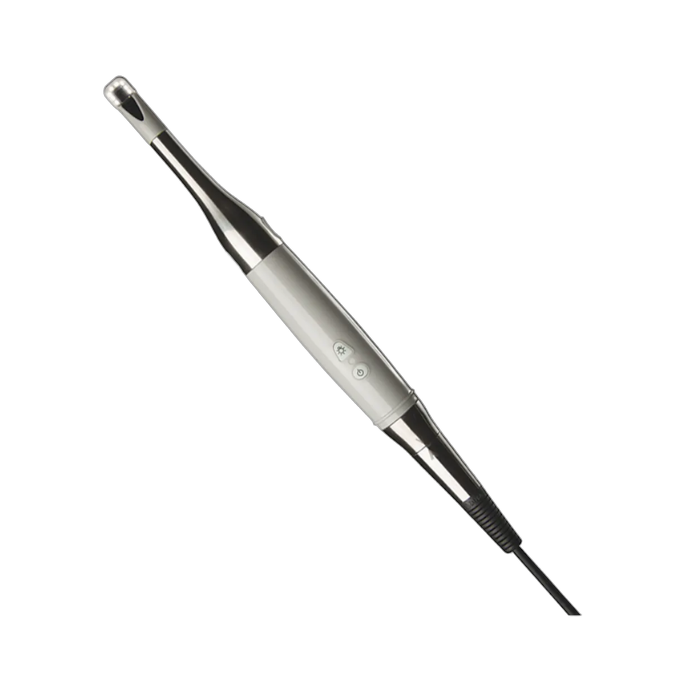
An intraoral camera is a small handpiece that captures magnified images and video from inside a patient's mouth and puts them on the chair-side screen. It is one of the most affordable ways into digital dentistry, and one of the most persuasive: a patient who can see a cracked filling on the monitor understands the treatment plan far better than one hearing it described. This guide sets out what intraoral cameras cost in Australia in 2026, the specs that change the price, and how to choose one that fits your practice and software.
Why intraoral cameras earn their place
Dentistry is a large and growing sector. The Australian dental services industry is worth around $14.5 billion and spans about 20,347 businesses in 2025, according to IBISWorld, supported by a workforce that included roughly 18,383 registered dentists, per the Australian Institute of Health and Welfare. Demand is steady: about 53.9% of Australians saw a dental professional in the 12 months to 2024-25, reported by the Australian Bureau of Statistics.
The same ABS data shows about 16.1% of people delayed or skipped dental care due to cost, which is where a camera quietly helps. When a patient can see the problem for themselves, the clinical need becomes concrete rather than abstract, and the published literature consistently links intraoral cameras to better patient understanding and higher case acceptance. For a modest outlay, a camera improves communication, documents findings for the record, and supports clearer conversations about treatment, all without the cost of a full scanner.
What an intraoral camera costs in Australia
Price scales with resolution, focus, and features. Treat the bands below as a price guide for comparison rather than fixed quotes.
| Tier | Typical price range | Best suited to |
|---|---|---|
| Entry USB (fixed focus) | $550 - $1,500 | Documentation and basic patient education |
| Mid-range (HD, autofocus, wireless) | $1,500 - $3,500 | Most general practices |
| Premium (1080p+, autofocus, detection) | $3,500 - $5,000+ | Caries and fluorescence detection, image quality |
| Intraoral scanner (adjacent category) | $20,000 - $60,000 | 3D digital impressions, not photos |
The clinic-grade intraoral camera category on the marketplace averages around $3,000. Be careful to separate professional cameras from cheap consumer USB units sold online for as little as $50: the low-cost imports rarely integrate cleanly with practice-management software and are not built for clinical infection control. Remember too that a camera is a different product from an intraoral scanner, which captures 3D impressions and costs many times more. The main running cost is single-use barrier sheaths for infection control, so factor those in alongside the price tag. Compare current listings on the intraoral camera page, and the intraoral scanner page if you are weighing the 3D step up.
The specs that decide the price
These are the features to compare when you request quotes:
- Image resolution: Options run from standard definition through 720p to full 1080p and higher. Treat vague megapixel claims on cheap units with caution and prioritise genuine clinical image quality.
- Focus: Fixed focus is simpler and cheaper, while autofocus gives sharper images across the range from a single tooth to a full arch. This is a key price and quality differentiator.
- Lighting and field of view: Even LED illumination with anti-glare control and a focal range from macro to full arch make for clearer, more useful images.
- Connectivity: USB wired cameras are reliable and plug-and-play with no charging, while wireless and WiFi models free the handpiece from a cable but need battery management.
- Software integration: Confirm the camera works with your practice-management and imaging platform and outputs standard file formats. Clean integration is where cheap generic units often fall short.
- Capture control and ergonomics: An on-handpiece capture button or foot pedal, plus a slim, light handpiece, make capture faster and improve access to rear teeth and patient comfort.
- Detection features: Premium cameras with fluorescence or multi-wavelength heads aid caries and plaque detection, moving the device from documentation toward a diagnostic aid.
Matching the camera to your practice
The choice comes down to what you want the camera to do. Decide whether you need simple documentation and patient education or higher image quality and detection features, and confirm it integrates with your existing software before you shortlist.
A realistic scenario
Consider a two-chair general practice in suburban Perth wanting to lift case acceptance for restorative work. Patients often hesitate when treatment is described verbally, and the practice has no chair-side imaging beyond radiographs.
A mid-range HD autofocus intraoral camera around the $2,500 mark, chosen specifically because it integrates with the practice's management software, lets the dentist show a patient the exact crack or worn filling on screen in seconds. Case acceptance for the discussed work improves because the need is visible, not abstract, and the images are saved to the patient record. The practice budgets for barrier sheaths as an ongoing consumable. A full intraoral scanner was considered but set aside as a separate, far larger investment for 3D impressions. For practices weighing that step up, the intraoral scanner buying guide covers where 3D scanning fits and what it costs.
Frequently asked questions
How much does a dental intraoral camera cost in Australia?
Clinic-grade intraoral cameras generally list from $1,000 to $5,000, averaging around $3,000. Entry USB models start near $550, mid-range HD autofocus units run $1,500 to $3,500, and premium cameras with detection features reach $5,000 or more. Cheap consumer imports exist but are not built for clinical use.
What is the difference between an intraoral camera and an intraoral scanner?
An intraoral camera captures close-up photos and video for diagnosis, documentation, and patient education. An intraoral scanner captures 3D digital impressions for restorations and aligners and costs far more, typically $20,000 to $60,000. They are different tools for different jobs.
Should I choose a USB or a wireless intraoral camera?
USB wired cameras are reliable, plug-and-play, and never need charging, which suits a fixed chair-side setup. Wireless and WiFi models remove the cable for easier handling but require battery management and can add slight latency. Choose based on how you work between chairs.
Do intraoral cameras have ongoing costs?
The main ongoing cost is single-use barrier sheaths, used one per patient for infection control, which come in packs at a modest per-piece price. Beyond that, cameras are low-maintenance, though it is worth confirming warranty terms and that the unit keeps working with future software updates.
What matters most
An intraoral camera is one of the highest-return, lowest-cost tools in digital dentistry, but only if it fits how you work. Match the resolution, focus, and connectivity to your needs, and above all confirm it integrates cleanly with your practice software, since a camera the team cannot easily use gets left in the drawer. Factor in barrier sheaths, and keep cameras clearly separate from far pricier scanners. Get the fit right and it pays back in clearer patient conversations and stronger case acceptance.
Ready to compare resolution, software integration, and pricing on intraoral cameras? Request quotes from intraoral camera suppliers across Australia here.