Let us get you 3 quotes
Compare and select the best X-Ray Machine
Compare Quotes
Find the right
X-Ray Machine in Sydney
4.8
Google reviews

Join medical buyers comparing supplier quotes and buying with confidence. Free, quick and easy.

View Price Range
X-Ray Machine
Compare quotes from expert Sydney X-Ray Machine suppliers like:
How MedicalSearch works

Tell us what you need

Get personalised quotes

Compare and choose

Looking to buy the best for sale in Sydney? Get Quotes sends your requirements to expert suppliers in Australia so you get personalised quotes to compare X-Ray Machine prices, specifications, features and terms then choose the one that’s right for you. Also compare servicing, consumables and reviews, so you can buy with confidence.
Save time
Compare quotes
Buy with confidence
Save time, compare quotes & buy with confidence

How to use this page

How this page helps you choose the right X-ray machine

Choosing the right X-ray machine comes down to a handful of decisions. Here we walk you through the ones that matter most to help you make a choice that meets your needs and your budget, without any expensive surprises after delivery. When you're ready, use our popular Get Quotes option to connect with verified Australian suppliers so you can compare quotes and buy with confidence.

Common setups

Three common x-ray machine setups

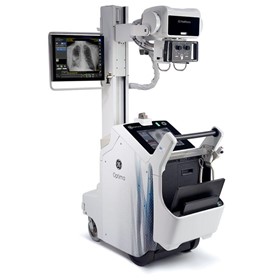
Mobile and portable units
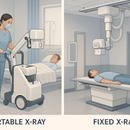
A portable x-ray machine or mobile unit wheeled to the bedside, ward, or theatre for patients who cannot come to the imaging room.
$40,000 - $150,000Indicative, before GST
ImagingDigital radiography panel
SourceMobile generator, up to about 125 kV
ShieldingLead aprons and distance
Best forBedside, ward, ICU, theatre
Most popular
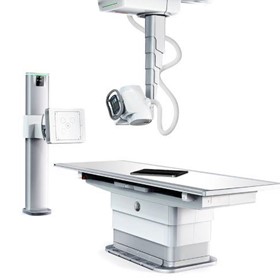
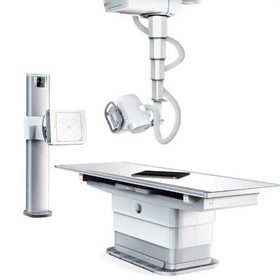
Fixed digital radiography (DR) room
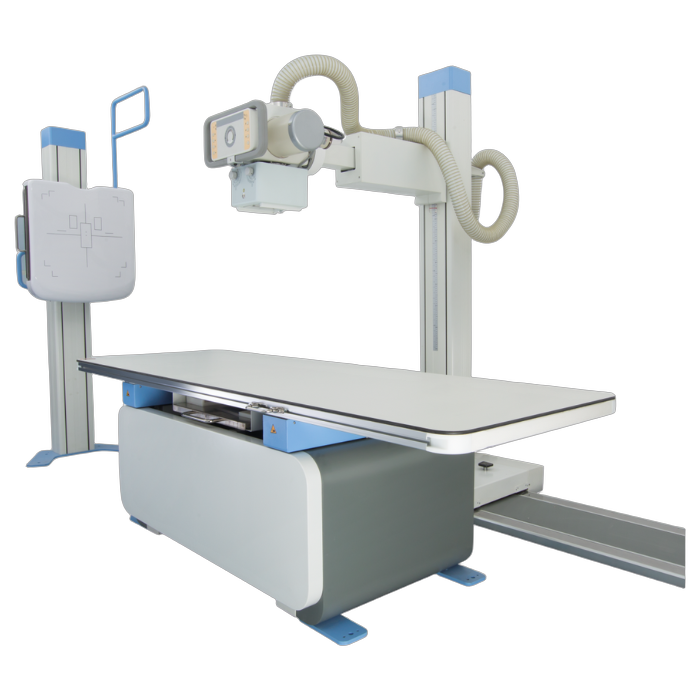
A static room-based DR system for general radiography: chest, abdomen, spine, and extremity imaging at volume.
$80,000 - $400,000Indicative, before GST
ImagingDigital radiography, fixed panels
SourceHigh-frequency generator, 40 to 150 kV
ShieldingLead-lined room
Best forGeneral radiography, high volume
Fluoroscopy and C-arm
Real-time moving imaging, from a mobile C-arm in theatre to a fixed fluoroscopy or interventional suite.
$300,000 - $1,000,000+Indicative, before GST
ImagingReal-time fluoroscopy
SourceContinuous and pulsed output
ShieldingLead-lined room, aprons
Best forTheatre, interventional, pain

Cost breakdown

What a medical X-ray machine costs, by setup

A medical X-ray machine runs from about $40,000 for a mobile or portable unit to $400,000 or more for a fixed digital radiography room, with fluoroscopy, C-arm, and interventional suites past $1,000,000. Whether you call it an x-ray machine, a portable or mobile unit, or a digital radiography system, the price tracks the setup more than the name.

SetupTypical price AUD, indicative, before GSTBest fit
Mobile and portable units$40,000 - $150,000Bedside, ward, ICU, and theatre imaging, wheeled to the patient
Fixed digital radiography (DR) room$80,000 - $400,000The most common clinical buy: general radiography at volume, including chest, abdomen, spine, and extremity
Fluoroscopy and C-arm$300,000 to $1,000,000+Real-time moving imaging for theatre, pain, and interventional work
Fixed interventional / angiography suite$250,000 to $1,000,000+Cardiac and vascular suites where live, high-detail imaging matters most, separate from mobile C-arm theatre use
What changes the price most
Within a setup, the generator and the detector change the price most. A higher-output generator supports faster, higher-dose work like fluoroscopy, and a larger or higher-resolution flat-panel detector costs more but captures finer detail. Shielding comes next: a mobile unit leans on aprons and distance, while a fixed room needs lead lining and a shielded control area. Software, real-time imaging, and new vs used follow.

Imaging technology

Digital x-ray machine or film: choosing how you capture the image

How the machine captures the image is a real fork, not a detail. It sets your speed per patient, your image quality, and your running cost. The main choice is a digital x-ray machine with a flat-panel detector, or the older computed radiography and film route.

Digital radiography (DR) Fast and reusable
Instant image on screen
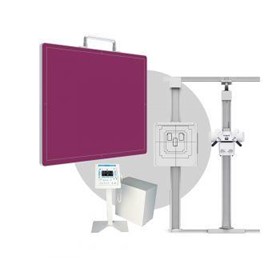
A flat-panel detector, common on mobile and fixed units, shows the image in seconds, so you review and move to the next patient without processing.
Fewer repeat images
A wide dynamic range can cut repeat images and lift workflow when exposure settings and positioning are well controlled.
Higher upfront, lower per image
The detector is the costly part, but there are no plates, chemicals, or film to buy per image.
Computed radiography and film Lower upfront
Lower entry cost
Film or reusable imaging plates suit low volumes and a tight budget.
Slower per image
Film needs processing, and computed radiography (CR) needs a plate scanner between exposures.
Consumables add up
Film, chemicals, or plate wear become a steady running cost once volumes climb.
Match the detector to your imaging
Detector size and resolution matter as much as the generator. A smaller high-resolution panel suits extremity and detail work, while a larger panel covers chest and abdomen in one exposure. Have your main exam types, the smallest detail you need to see, and your patient volume clear beforehand: those size the detector to the work, not just the machine.

Source and power

Sizing the X-ray source to your imaging

One connected decision: how much energy the source puts out and how fine a spot it focuses to. Tube voltage, measured in kilovolts (kV), sets what you can image through, from a thin extremity to a dense chest or pelvis. Focal spot size sets how fine the detail can be. Get this right and the image is clear at a safe dose. Get it wrong and you either underpenetrate the anatomy or lose fine detail.

SpecWhat it controlsWhy it matters
Tube voltage (kV)How dense or thick a body region the beam can pass through.A low-kV setting cannot get through a chest or pelvis, and too high a setting washes out a thin extremity. Match it to the exams you do most
Tube outputHow fast you get a clean image, set by tube current and power.Higher output can support shorter exposures and less motion blur where the detector and patient size allow
Focal spot sizeThe finest detail the system can resolve.A fine focal spot resolves small detail like extremities and fine bone. A larger spot suits general radiography of larger regions
Geometry and positioningHow the patient sits between the source and detector.Positioning and distance change magnification and sharpness, which sets the finest detail you can see for the region you image

Power and focal spot usually follow the setup. Mobile units and general radiography rooms run standard tubes for everyday exams. Fluoroscopy and interventional systems add continuous output for real-time imaging.

Size on the exam, not the headline kV
The common mistake is buying on top-end voltage alone. A system that gets through your hardest exam but cannot resolve fine detail is the wrong machine. Work out the exams you do most, your patient mix, the finest detail you must see, and your daily volume first: those set the tube voltage, output, focal spot, and detector together.

Compliance and shielding

Radiation shielding, licensing, and what they add to the job

An X-ray machine is a radiation apparatus, so how it is shielded and how it is licensed are one decision, and both change your install cost. A mobile unit relies on distance, lead aprons, and safe technique. A fixed radiography or fluoroscopy room needs lead-lined walls, a shielded control area, and room sign-off, which adds cost and lead time.

In most cases the apparatus, the premises, and the users must be authorised through the relevant state or territory radiation regulator. The exact permit, registration, or licence pathway varies by jurisdiction and use case. The national agency, ARPANSA, sets the codes and standards and directly licenses Commonwealth bodies only. Confirm what your state regulator requires before you buy, because it affects who can operate the machine and how the room is set up.

For medical imaging, the national code is the ARPANSA Code for Radiation Protection in Medical Exposure (RPS C-5). It sets the radiation protection requirements for exposing patients and usually calls for a radiation management plan and a qualified expert for higher-dose work. A fixed fluoroscopy or interventional room carries more requirements than a plain radiography room or a mobile unit.

What this changes in your quote
Know beforehand whether you are buying a mobile unit or a fixed room, what room shielding and control area it needs, and who handles the install and the regulator paperwork. A mobile unit can be working sooner and at lower install cost than a fixed fluoroscopy room that needs lead lining and sign-off. Be clear on the operator competency and any radiation safety officer your state regulator expects.

New or used

Buying a used x-ray machine, new, or refurbished

X-ray machines hold value, and ex-demo and refurbished units come up, especially room-based systems. The right call comes down to detector condition, software support, and how exactly the spec has to match the exams you run.

New Warranty and current detector
Current detector and software
A new flat-panel detector and current imaging software, so the costly parts start with full life ahead.
Specced to your exams
Choose the generator, detector size, and resolution for the exams you run rather than fitting your work to a used machine.
Full warranty and support
A manufacturer warranty and a clear path for calibration, software updates, and parts.
Used Lower upfront
Lower upfront cost
Often well below new for the same class, and frequently a mobile or room unit ready to run.
Detector and tube life are the real risk
Check detector condition and dead pixels, tube usage, the software version and support, and whether calibration is current, not just the age.
Ex-demo and refurbished sit in between
Late-model low-use units, sometimes with warranty left and current software, give much of new for less.
Checking a used X-ray system
Before you commit, know the detector pixel map, the tube usage, the software version and support, and that a test exposure looks clean. Confirm what documentation, compliance testing, service records, and registration steps are needed before the used system can lawfully image at your site. A dealer-backed unit with a warranty and current software is usually worth the premium over a private sale.

Ownership costs

What the system costs to run and own

The purchase price is the start. The detector, the tube, software support, calibration, and radiation safety all feed into what the system costs over its life.

Cost areaWhat to expectWhat changes the cost
DetectorThe flat-panel detector is the most valuable wear part. It degrades over years and eventually needs replacing.Usage, dose over time, and detector type and size
X-ray tubeThe tube has a service life and is a planned replacement, sooner on high-output systems like fluoroscopy.Output, duty cycle, and hours of use
Software and licensingImaging and analysis software often carries a support or licence fee, and fluoroscopy or interventional software is its own cost.Whether you need real-time, networking, or reporting software
Calibration and testingRadiation leakage tests and image-quality checks are scheduled, and some are required by your regulator.State regulator requirements and system type
Service and supportDowntime is the hidden cost. A service agreement keeps the system imaging and compliant.Service agreement terms and response time
The cost that bites
The detector and software support are the two that catch buyers out. A detector replacement is a large planned bill, and unsupported software can strand an otherwise good machine. Weigh the service agreement and software support alongside the quote, not after it.

Before you quote

What to decide before you request quotes

Get these requirements clear upfront and suppliers can provide accurate X-ray machine quotes the first time, rather than making assumptions.

1Exams and patients: the exams you run most, your patient mix, and the finest detail you need to see. This sets the generator and detector.
2Volume and setup: your daily patient volume and whether you want a mobile unit, a fixed DR room, or fluoroscopy and C-arm. This sets the format.
3Imaging and detector: digital radiography or computed radiography and film, plus the detector size and resolution to suit your exams.
4Shielding and site: whether you need a lead-lined room or a mobile unit, and the space, power, and access at your site.
5New, used, or budget basis: new or used, whether you are comparing on purchase price or monthly finance, your delivery location, and any state regulator requirements.
The one-line version
Exams and patients, volume and setup, imaging and detector, shielding and site, and new or used. Send those five and your quotes will be worth comparing.

Finance options

Finance options for your X-ray machine purchase

A medical X-ray machine is a large upfront cost, and the detector, software, and any room shielding add to it. To spread that into a monthly repayment, many buyers look at equipment finance alongside the quote comparison. What finance looks like for your business comes down to the answers below, and it is worth checking how the purchase sits under the ATO small business depreciation rules.

Finance questionWhat it helps you decideWhy it matters
What could the monthly repayment be?Whether the machine fits your monthly cash flow before committing to a quote.Most x-ray machines sit in a price range where the monthly repayment is easier to weigh against the throughput it wins you than the upfront cost alone.
Am I likely to get approved?Whether your business, trading history, and the machine's value are financeable.MedicalSearch finance works across a panel of lenders, which can improve the chance of finding a suitable approval pathway.
Which finance structure suits the purchase?Whether to compare options such as chattel mortgage, lease, rental, or low-deposit finance.The right structure can affect ownership, monthly cost, cash flow, and how quickly you can move ahead.

Finance calculator

Estimate my repayment

Adjust the sliders to estimate your X-ray machine repayments. Speak with our team for an exact quote based on your profile.

Loan amount $150,000
Loan term 5 years
Interest rate 7.45% p.a.
Repayment frequency
Estimated repayment
$3,002
per month
Loan amount$150,000
Total interest$30,128
Total repayable$180,128
Number of repayments60
Get Quotes

Estimate only, not an offer of finance. Compare quotes and finance options for X-ray machines.

Common questions

Common X-ray machine questions buyers ask before quoting

Quick answers to the most-searched questions about medical X-ray machines and how MedicalSearch works.

Why use MedicalSearch to buy an X-ray machine?

MedicalSearch helps you compare multiple reputable Australian suppliers with a single enquiry, saving you time and effort. Instead of contacting suppliers individually, you can compare suitable devices, technology, compliance requirements, service support, and ongoing consumables in one place. This helps you find the right X-ray machine for your exams, patient volume, and site requirements while avoiding costly mistakes and making a more informed purchasing decision.

How much does an X-ray machine cost?

It depends on the setup. A mobile or portable unit runs $40,000 - $150,000. A fixed digital radiography (DR) room, the common clinical buy, runs $80,000 - $400,000. Fluoroscopy and C-arm systems run $300,000 to $1,000,000+. A fixed interventional / angiography suite runs $250,000 to $1,000,000+. All figures are indicative and before GST. Within a band, the generator and the detector change the price most.

What type of X-ray machine do I need?

Work back from the exams you run. A mobile or portable unit suits bedside, ward, and theatre imaging. A fixed digital radiography (DR) room is the common buy for general radiography at volume. Fluoroscopy and C-arm systems suit real-time, theatre, and interventional work. Know the exams you do most, your patient volume, the finest detail you must see, and whether you need real-time imaging before you quote: those match the generator and detector.

What is the difference between digital radiography and computed radiography?

Digital radiography (DR) uses a flat-panel detector that shows the image on screen in seconds, with no plates or film to handle. Computed radiography (CR) uses a reusable imaging plate that you scan between shots, so it is slower but cheaper to enter. Film is the oldest route and needs chemical processing. DR suits volume and speed, while CR and film suit low volumes or a tight budget.

Does an X-ray machine always need a shielded room?

It depends on the unit. A mobile unit relies on distance, lead aprons, and safe technique rather than a built room, so it can work across wards and theatre. A fixed radiography or fluoroscopy room needs lead-lined walls and a shielded control area. Either way, you register the apparatus and meet your state regulator requirements.

Do I need a radiation licence for an X-ray machine in Australia?

In most cases, yes. The apparatus, the premises, and the users must be authorised through your state or territory radiation regulator, and the exact permit, registration, or licence pathway varies by jurisdiction and use case. Confirm the requirements for your site before the system is installed, including any radiation safety officer and compliance testing your regulator expects.

Is it worth buying a used X-ray machine?

It can be, if you check the right things. The detector and tube are the real risk, so confirm detector condition and dead pixels, tube usage, the software version and whether it is still supported, and that calibration is current, rather than going on age alone. Ex-demo and refurbished units sit between new and used: late-model, low-use, sometimes with warranty left and current software, giving much of new for less. A dealer-backed unit with a warranty is usually worth the premium over a private sale.

How long does finance pre-approval take?

Equipment finance pre-approval is usually quick, often within a few business days once you provide basic business and financial details. Pre-approval lets you compare quotes knowing your repayment and borrowing capacity, without committing to a purchase.

What documents do I need to apply for equipment finance?

For most equipment finance under a set threshold, lenders ask for limited paperwork: your business ABN and trading history, recent bank statements, and details of the system being financed. Larger amounts can need business financials or tax returns. MedicalSearch finance works across a panel of lenders, so the exact requirements vary by amount and lender.

Why MedicalSearch

Why buyers choose MedicalSearch

Helping Australian medical and healthcare buyers compare suppliers since 2011.

Compare suppliers in one place
Comparing quotes side by side helps you avoid the wrong generator, an undersized detector, or a supplier who can't support the software and shielding.
Stop chasing suppliers individually
One request saves repeating your exams, room, detector, and shielding needs to each supplier separately.
Access reputable Australian suppliers
Compare suppliers who can match the generator and detector to your exams, handle the room shielding and regulator paperwork, and back it with calibration and service.
Free for buyers, no obligation. Suppliers pay to list; buyers pay nothing.

Let us get you 3 quotes

Compare expert suppliers and select the best X-Ray Machine

chevron bullet point How to get X-Ray Machine Quotes

  1. Click Get Quotes
  2. Submit Your Requirements
    Quantity, timeline and describe any necessary features.
  3. Receive Personalised Quotes
    Suppliers will review your request and send you tailored quotes.
Are you a X-Ray Machine supplier?
Reach valuable medical buyers in minutes
Promote key products & content
Drive cost effective & measurable sales
learn more