Let us get you 3 quotes
Compare and select the best Thermal Washer Disinfector
Compare Quotes
Find the right
Thermal Washer Disinfector in Brisbane
4.8
Google reviews

Join medical buyers comparing supplier quotes and buying with confidence. Free, quick and easy.

View Price Range
Thermal Washer Disinfector
Compare quotes from expert Brisbane Thermal Washer Disinfector suppliers like:
How MedicalSearch works

Tell us what you need

Get personalised quotes

Compare and choose

Looking to buy the best for sale in Brisbane? Get Quotes sends your requirements to expert suppliers in Australia so you get personalised quotes to compare Thermal Washer Disinfector prices, specifications, features and terms then choose the one that’s right for you. Also compare servicing, consumables and reviews, so you can buy with confidence.
Save time
Compare quotes
Buy with confidence
Save time, compare quotes & buy with confidence

How to use this page

How this page helps you choose the right thermal washer disinfector

Choosing the right thermal washer disinfector comes down to a handful of decisions. Here we walk you through the ones that matter most to help you make a choice that meets your needs and your budget, without any expensive surprises after delivery. When you're ready, use our popular Get Quotes option to connect with verified Australian suppliers so you can compare quotes and buy with confidence.

Common setups

Three common thermal washer disinfector setups

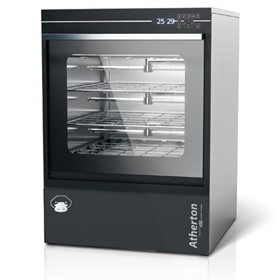
Benchtop or undercounter
Dental, podiatry, vet, and small clinic loads where bench or under-bench space is tight and volume is modest.
$8,000 - $25,000Indicative, before GST
CapacityUp to about 6 DIN trays
FootprintBench or under-counter
DisinfectionUsually A0 600
Best forHandpieces, general instruments
Most common
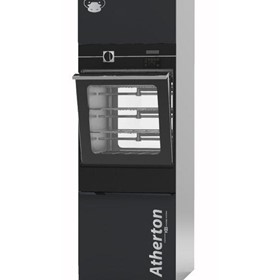
Freestanding single-chamber
Day surgery, busy practices, and larger labs that need more throughput than a benchtop can give.
$25,000 - $60,000Indicative, before GST
Capacity8 to 12 DIN trays
FootprintFreestanding floor unit
DisinfectionA0 600 to A0 3000
Best forMixed surgical loads
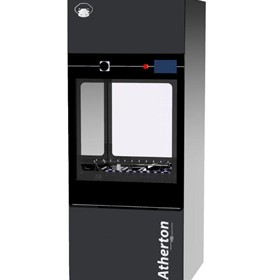
Large CSSD or pass-through
Hospitals and central sterile services departments that separate clean from dirty at high volume.
$50,000 - $150,000+Indicative, before GST
CapacityUp to 18 DIN trays or more
FootprintSingle or double-door barrier
DisinfectionA0 3000
Best forLumened and critical instruments

Cost breakdown

What a thermal washer disinfector costs, by machine type

A thermal washer disinfector runs from about $8,000 for a benchtop unit to $150,000 or more for a large central sterile machine. Most clinic and day-surgery buyers land in the freestanding band between $25,000 and $60,000. The biggest price drivers are capacity, the disinfection level you need, and whether the machine is single-door or a double-door pass-through. Pricing in this category is quote-based, so treat these as indicative ranges and confirm against current supplier quotes.

Machine typeIndicative price AUD, before GST, Australian supplierBest fit
Benchtop / undercounter$8,000 - $25,000Dental, podiatry, vet, small clinics, and labs
Freestanding single-chamber$25,000 - $60,000Day surgery, busy practices, larger labs
Large CSSD / pass-through$50,000 - $150,000+Hospitals and central sterile departments
What changes the price
Capacity is the first lever: more DIN trays per cycle costs more. A higher disinfection level (A0 3000) and a double-door pass-through both add to the price, as do an integrated dryer, more dosing pumps for detergent and neutraliser, and cycle traceability. Ask each supplier to quote the machine, the baskets and load carriers, installation, and a validation and service plan as separate line items so you can compare like for like.

What you reprocess

Matching the washer disinfector to your load and the A0 level you need

This is the decision that shapes every quote. What you clean sets the baskets, the connectors, and the thermal disinfection level. A0 is the measure of thermal disinfection: roughly the lethality of time spent at temperature. A0 600 suits general instruments that go on to be sterilised, while A0 3000 is commonly used for higher-risk lumened or minimally invasive instruments where the instrument manufacturer's instructions allow thermal processing. Confirm the validated cycles and A0 levels a machine supports before you compare, since not every configuration supports every load type.

A0 600 General loads
For instruments going on to sterilisation
Suits general solid surgical and dental instruments that are cleaned and disinfected here, then sterilised in an autoclave afterwards.
Shorter, lower-temperature cycle
Reaches the disinfection target faster, which lifts throughput and is gentler on heat-tolerant items.
Common in dental and small clinics
Often enough where the load is handpieces and general instruments rather than lumened or critical devices.
A0 3000 Critical and lumened
For higher-risk and lumened instruments
Used for minimally invasive and lumened instruments where the item's instructions for use allow thermal processing.
Longer cycle at higher temperature
More time at temperature gives the higher lethality, which extends the cycle but covers a wider range of loads.
Expected in hospital CSSD
Most central sterile machines run A0 3000 so one washer can cover the full range of reusable devices.
Tell the supplier what you clean
List your real load: general instruments, lumened or minimally invasive instruments, dental handpieces, anaesthetic or respiratory equipment, utensils, or laboratory glassware. Each needs the right baskets, injector connectors for lumens, and the matching A0 level. A machine sized and configured for the wrong load is the most expensive mistake in this category, so get the load type into your quote request.

Door configuration

Choosing between a single-door and a double-door pass-through washer disinfector

The door configuration decides how the machine sits in your room and what it costs. A single-door unit loads and unloads from the same side. A double-door pass-through loads dirty on one side and unloads clean on the other, through a barrier wall, which keeps the clean and dirty workflows physically separate. Pick on your room design and infection-control workflow, not just price.

Single door Lower cost
Lower price and simpler install
Costs less to buy and to fit, and works in a single reprocessing room without a barrier wall.
Fits most practices and small CSSDs
Suits dental, day surgery, and smaller departments where one room handles both sides of the workflow.
Workflow relies on procedure
Clean and dirty separation depends on layout and staff process rather than a physical barrier.
Double-door pass-through Barrier workflow
Physical clean and dirty separation
Dirty loads in one room, clean comes out the other, so the two zones never mix through the machine.
Built for larger CSSD design
The expected configuration where a barrier wall separates the decontamination and clean areas.
Higher cost and a wall to build
Costs more than a single-door machine and needs the room built around the barrier, so plan it into the fit-out.
Quick rule
One reprocessing room and a modest volume: a single-door machine does the job for less. A purpose-built department with separate decontamination and clean zones: a double-door pass-through earns its cost through the barrier. Decide your room layout first, since it sets which machine you can even fit.

Compliance and validation

Meeting AS 5369 and TGA requirements for a washer disinfector

Compliance changes your shortlist, so check it before you compare specs. A surgical instrument washer disinfector supplied in Australia should be supplied under a current Australian Register of Therapeutic Goods (ARTG) entry for its sponsor and product type, where these machines sit as Class IIb devices: ask each supplier for the ARTG number of the exact model quoted. On top of that, reprocessing in a health facility must meet AS 5369:2023, the Australian standard that replaced AS/NZS 4187 and AS/NZS 4815 in December 2023. Confirm a machine clears both before you shortlist it.

What to confirmWhy it matters
TGA-included deviceAsk for the ARTG number covering the exact model and sponsor being quoted
Validation to AS 5369Installation, operational, and performance qualification, so you can show the machine works as intended
Final rinse waterPurified or reverse osmosis water that meets the water quality limits in the standard, with monitoring
Cycle traceabilityA printout or electronic record of each cycle, so reprocessing can be documented and audited
Build validation into the quote
A machine that cannot be validated for your intended reprocessing use may not be suitable for patient-care instruments. Ask each supplier whether the unit is TGA-included, whether they provide installation and performance qualification, and what the final-rinse water setup needs. AS 5369 also brought in an annual washer-disinfector final rinse audit that includes water chemistry and bacterial endotoxin testing, so factor ongoing validation into your decision, not just the purchase.

New vs used

Buying a used, new, or refurbished thermal washer disinfector

A well-kept used thermal washer disinfector can deliver most of the value of a new one for less. The wear that matters here is not just the cycle count. The pumps, heaters, dosing system, and door seals tell the real story, and on any unit the question that decides it is whether the machine can still be validated and documented.

Buy new Lower risk
Full warranty and clean validation
A new unit carries a manufacturer warranty and a fresh installation and performance qualification, so the documentation trail starts with you.
Configure it to your load
Choose the A0 level, baskets, injector connectors, and door type to suit your work, rather than working around what a used machine happens to have.
Longest finance terms
New machines attract the longest finance terms, so the monthly repayment can land lower than the price gap suggests.
Buy used Check the wear
Lower upfront cost
Often well below the same new spec, and frequently available sooner than a new build lead time.
Pumps, heaters, and seals are the risk
Check the wash and circulation pumps, heating element, dosing system, and door seals, not just the cycle count, since those drive repair cost.
It must still be validatable
Confirm the model is still TGA-included, can pass performance qualification, and comes with a service history before you commit.
Refurbished is a strong middle ground
A dealer-refurbished unit, often with replaced wear parts and a service record, gives much of the reliability of new for less.
Always ask on used
Get the cycle count, a recent service history, and proof the machine can still be validated to AS 5369. Ask whether the model remains TGA-included and whether spare parts are still supported, since an orphaned model can be cheap to buy and impossible to keep running.

Ownership costs

What a washer disinfector costs to run and own

Purchase price is only part of what you spend. The rest is consumables, water and energy, servicing, and the ongoing validation the standard requires. A machine that is cheap to buy but heavy on detergent, water, and service visits can cost more over its life, so weigh the running cost alongside the quote.

Cost areaWhat to expect indicative per year, varies with daily cyclesWhat changes the cost
Detergent, neutraliser, rinse aid$1,500 - $5,000Cycles per day and the dosing the load needs
Water and energy$500 - $3,000Cycle volume, A0 level, and machine efficiency
Routine servicing$1,000 - $3,500Usage, model, and service contract scope
Annual validation and water testing$1,000 - $3,000Number of machines and the tests the standard requires
Water treatment upkeep$500 - $2,500Reverse osmosis or purified water system maintenance
The cost that is easy to miss
Validation and water testing are recurring, not one-off. AS 5369 expects ongoing monitoring of final-rinse water and an annual audit, so build a validation and service plan into your five-year cost. A purified or reverse osmosis water system adds upkeep too, but protects both your instruments and your compliance.

Decide before you quote

What to decide before you request quotes

Get these requirements clear upfront and suppliers can provide accurate thermal washer disinfector quotes the first time, rather than making assumptions.

1What you reprocess: general instruments, lumened or minimally invasive instruments, dental handpieces, anaesthetic or respiratory equipment, utensils, or lab glassware. This sets the baskets, connectors, and disinfection level.
2A0 disinfection level: A0 600 for general loads going on to sterilisation, A0 3000 for higher-risk, lumened or minimally invasive instruments where the instructions for use allow thermal processing. Confirm the validated cycles before purchase.
3Capacity and footprint: the DIN trays you process per session, and whether you have bench, under-counter, or floor space, plus single-door or double-door pass-through.
4Site services: power, water supply, and drainage, and whether you can provide purified or reverse osmosis water for the final rinse, since AS 5369 sets water quality limits.
5Validation and documentation: whether you need installation and performance qualification, cycle printing or electronic traceability, and a service and validation contract.
The one-line version
Load type, A0 level, capacity and footprint, water setup, and validation needs. Send those five and your quotes will be worth comparing.

Finance options

Finance options for your thermal washer disinfector purchase

A thermal washer disinfector is a large upfront cost, and the baskets, water treatment, and validation add to it. To spread that into a monthly repayment, many buyers look at equipment finance alongside the quote comparison. What finance looks like for your practice comes down to the answers below.

Finance questionWhat it helps you decideWhy it matters
What could the monthly repayment be? Whether the machine fits your monthly cash flow before committing to a quote. Most thermal washer disinfectors sit in a price range where the monthly repayment is easier to weigh against throughput than the upfront cost alone.
Am I likely to get approved? Whether your practice, trading history, and the machine's value are financeable. MedicalSearch finance can compare options across a panel of lenders, which may help identify a suitable approval pathway.
Which finance structure suits the purchase? Whether to compare options such as chattel mortgage, lease, rental, or low-deposit finance. The right structure can affect ownership, monthly cost, cash flow, and how quickly you can move ahead.

Finance calculator

Estimate my repayment

Adjust the sliders to estimate your thermal washer disinfector repayments. Speak with our team for an exact quote based on your profile.

Loan amount $35,000
Loan term 5 years
Interest rate 6.85% p.a.
Repayment frequency
Estimated repayment
$691
per month
Loan amount$35,000
Total interest$6,434
Total repayable$41,434
Number of repayments60
Get Quotes

Indicative only and not a quote, approval, or offer of finance. Compare quotes and finance options for thermal washer disinfectors.

Common questions

Thermal washer disinfector questions buyers commonly ask

Quick answers to the most-searched questions about thermal washer disinfectors and how MedicalSearch works.

Why use MedicalSearch to buy a thermal washer disinfector?

Most buyers want to compare a few quotes before committing, and on washer disinfectors the load type, A0 level, capacity, and door configuration make quotes hard to line up. MedicalSearch gets you 3+ quotes from verified Australian suppliers in one go, covering benchtop, freestanding, and CSSD machines, so you can compare price, capacity, disinfection level, and validation support side by side without contacting suppliers one by one.

Does it cost more to buy a thermal washer disinfector through MedicalSearch?

No. The service is free for buyers, and suppliers quote you their normal direct prices with no markup. Getting multiple quotes side by side often sharpens pricing because suppliers know they are competing for your purchase.

Why do suppliers list with MedicalSearch?

MedicalSearch has connected Australian healthcare buyers with medical equipment suppliers since 2011. Suppliers list with us because they get enquiries from buyers who are actively in market, rather than general search traffic. Suppliers are vetted before listing, so you deal with established Australian suppliers who can support installation, validation, and servicing.

How much does a thermal washer disinfector cost?

As an indicative guide, before GST: a benchtop or undercounter unit runs $8,000 to $25,000, a freestanding single-chamber machine runs $25,000 to $60,000, and a large CSSD or pass-through machine runs $50,000 to $150,000 or more. Capacity, the A0 disinfection level, and a double-door pass-through are the main price drivers. Pricing is quote-based, so confirm against current supplier quotes.

What is the difference between a thermal washer disinfector and an autoclave?

They do different jobs in the same reprocessing workflow. A washer disinfector washes and thermally disinfects your instruments. An autoclave then sterilises them with steam under pressure. Most practices need both: the washer disinfector cleans and disinfects first, then the autoclave sterilises. A washer disinfector does not replace a steriliser.

What is the A0 value and which one do I need?

A0 is a measure of thermal disinfection, based on the time the load spends at temperature. A0 600 suits general instruments that go on to be sterilised. A0 3000 is commonly used for higher-risk lumened or minimally invasive instruments where the instructions for use allow thermal processing. Truly heat-sensitive items may need a different validated reprocessing pathway, so confirm the validated cycles a machine supports before purchase.

Is it worth buying a used thermal washer disinfector?

It can be, if the wear parts check out and the machine can still be validated. Check the wash and circulation pumps, heating element, dosing system, and door seals rather than just the cycle count. Confirm the model is still included in the ARTG, can pass performance qualification to AS 5369, and has spare-parts support. A dealer-refurbished unit with replaced wear parts and a service record is often the safer middle ground.

Do I need a double-door pass-through washer disinfector?

Only if your room is built for it. A double-door pass-through loads dirty on one side and unloads clean on the other through a barrier wall, which keeps the clean and dirty workflows physically separate. It is the expected configuration in larger central sterile departments. A single reprocessing room with a modest volume is usually served well by a single-door machine at lower cost.

Does a thermal washer disinfector need purified or reverse osmosis water?

The final rinse should use water that meets the quality limits set by the reprocessing standard, which usually means purified or reverse osmosis water and ongoing monitoring. Hard or untreated water can leave deposits on instruments and affect both performance and compliance. Confirm the water setup the machine needs and build any treatment system into your site plan.

Does a washer disinfector need to be validated to AS 5369?

Yes, for use in a health facility. AS 5369:2023, which replaced AS/NZS 4187 and AS/NZS 4815, expects installation, operational, and performance qualification when the machine is commissioned, plus ongoing monitoring and an annual final-rinse water audit. Ask your supplier whether they provide validation and what the ongoing testing involves before you buy.

How long does finance pre-approval take?

Equipment finance pre-approval is usually quick, often within 1 to 2 business days once you provide basic business and financial details. Pre-approval lets you compare quotes knowing your repayment and borrowing capacity, without committing to a purchase.

What documents do I need to apply for equipment finance?

For most equipment finance under a set threshold, lenders ask for limited paperwork: your business ABN and trading history, recent bank statements, and details of the machine being financed. Larger amounts can need business financials or tax returns. MedicalSearch finance can compare options across a panel of lenders, so the exact requirements vary by amount and lender.

Why MedicalSearch

Why buyers choose MedicalSearch

Helping Australian healthcare buyers compare suppliers since 2011.

Compare suppliers in one place
Comparing quotes side by side helps you avoid the wrong A0 level, paying for capacity you don't need, or a machine that cannot be validated to AS 5369.
Stop chasing suppliers individually
One request saves repeating your load type, capacity, A0 level, door configuration, and water setup to each supplier separately.
Access reputable Australian suppliers
Compare suppliers who can match the machine to your load, confirm it is TGA-included, and support validation and servicing, not just sell a box.
Free for buyers, no obligation. Suppliers pay to list; buyers pay nothing.

Let us get you 3 quotes

Compare expert suppliers and select the best Thermal Washer Disinfector

chevron bullet point How to get Thermal Washer Disinfector Quotes

  1. Click Get Quotes
  2. Submit Your Requirements
    Quantity, timeline and describe any necessary features.
  3. Receive Personalised Quotes
    Suppliers will review your request and send you tailored quotes.
Are you a Thermal Washer Disinfector supplier?
Reach valuable medical buyers in minutes
Promote key products & content
Drive cost effective & measurable sales
learn more