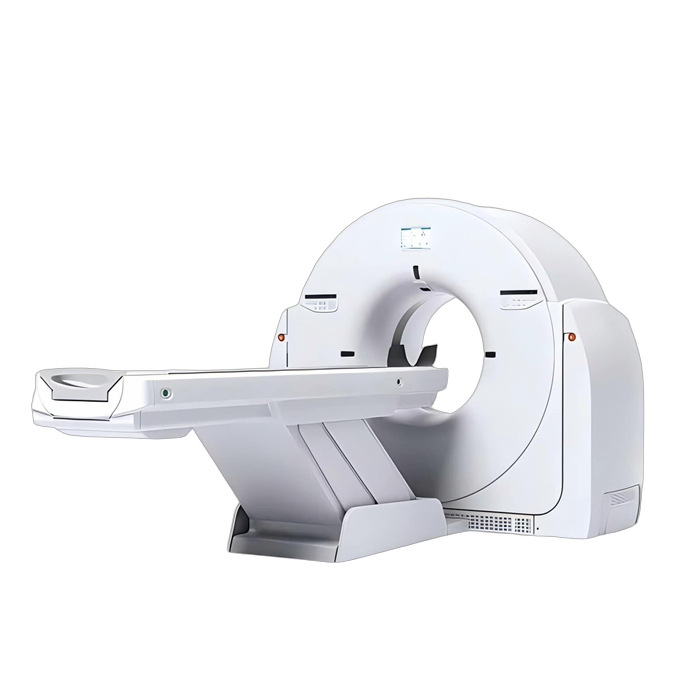
Let us get you 3 quotes
Compare and select the best CT Scanner
Compare Quotes
Find the right
CT Scanner in Darwin
4.8
Google reviews

Join medical buyers comparing supplier quotes and buying with confidence. Free, quick and easy.

View Price Range
CT Scanner
Compare quotes from expert Darwin CT Scanner suppliers like:
How MedicalSearch works

Tell us what you need

Get personalised quotes

Compare and choose

Looking to buy the best for sale in Darwin? Get Quotes sends your requirements to expert suppliers in Australia so you get personalised quotes to compare CT Scanner prices, specifications, features and terms then choose the one that’s right for you. Also compare servicing, consumables and reviews, so you can buy with confidence.
Save time
Compare quotes
Buy with confidence
Save time, compare quotes & buy with confidence

Cost breakdown

What a CT scanner costs, by slice count

A computed tomography (CT) scanner runs from about $90,000 for a refurbished entry-level unit to $2,000,000 or more for a premium high-slice system. A CT scanner is also sold as a CT scan machine or a CT machine, and you will see the CT scan short form used too, but what changes the price stays the same whatever the listing calls it. Slice count and whether the scanner is new or refurbished set the band. Site preparation and install are quoted on top, so treat the scanner price as the starting figure, not the landed cost.

TierTypical price AUD, scanner only, refurbished to new, before GSTBest fit
Entry (16-slice)$90,000 - $360,000General radiology and routine diagnostic work at moderate patient volume
Mid (64-slice)$175,000 - $700,000The common hospital class: faster scans, basic cardiac, and higher patient volume
Premium (128 to 320-slice)$675,000 - $2,000,000+Advanced cardiac, oncology planning, and interventional work needing the fastest, highest-resolution scans
What changes the price most
The biggest swings are slice count and new vs refurbished. Moving from a 16-slice to a 64-slice platform can add 30 to 50 percent or more. A refurbished unit can sit well below a new one of the same slice count. The X-ray tube condition, the detector, dose-reduction software, and the site build change the price from there. Ask suppliers to quote the scanner, the install, and the first service term as separate line items, not one bundled figure.

Common setups

Three common CT scanner setups
Community and general radiology
Routine diagnostic imaging at a clinic or community practice: head, chest, abdomen, and trauma at moderate volume.
$90,000 - $360,000Typical, before GST
Slice count16-slice
UseGeneral radiology
Scan speedStandard
Best forModerate daily volume
Most popular
Hospital and high volume
Busy hospital or imaging centre running general work plus basic cardiac at higher daily volume.
$175,000 - $700,000Typical, before GST
Slice count64-slice
UseGeneral plus cardiac
Scan speedFast
Best forHigh daily volume
Advanced and cardiac
Advanced cardiac, oncology planning, and interventional studies that need the fastest scans and highest temporal resolution.
$675,000 - $2,000,000+Typical, before GST
Slice count128 to 320-slice
UseAdvanced cardiac, oncology
Scan speedFastest
Best forComplex, time-critical work

Slice count

Matching slice count to the studies you run

Slice count is the core decision on a CT scanner. It sets how much anatomy the scanner captures per rotation, how fast a scan finishes, and which studies you can run. More slices means faster scans and finer detail, and a higher price. Buy for the studies you actually do, not the highest number you can find.

Slice countWhat it does wellBest fit
16-sliceGeneral radiology: head, chest, abdomen, trauma, and routine diagnostic work.Community clinics and moderate patient volume
32 to 64-sliceFaster scans and basic cardiac with heart-rate control. The common hospital class.Hospitals and busy imaging centres
128 to 320-sliceAdvanced cardiac without heart-rate control, low-dose protocols, and the fastest scans.Cardiac, oncology planning, and interventional work

Two things travel with slice count. Scan speed rises as slices rise, which matters for patients who cannot hold still and for high daily volume. Dose-reduction technology tends to be stronger on newer, higher-slice machines: automatic exposure control, tube current modulation, and iterative reconstruction lower the radiation dose while holding image quality. If patient dose or throughput matters to you, weigh the software, not just the slice number.

Buy for your studies, not the number
A 16-slice scanner handles most general radiology well. The jump to 64-slice earns its cost if you run cardiac or high volume. Going past 64 is for advanced cardiac, oncology planning, and interventional work. Tell suppliers your main study mix and daily patient count, and they can match the slice count and the dose software as a set.

Site and install

Preparing the room and installing the scanner

A CT scanner is not a plug-in purchase. The room has to be shielded, powered, cooled, and able to carry the weight, and the install is quoted separately from the scanner. Site work commonly adds 10 to 20 percent to the scanner price, so factor it in before you compare quotes.

RequirementWhat it involvesWhy it matters
Radiation shieldingLead-lined walls, floor, door, and a leaded viewing window, sized by a qualified medical physicist for your room and your scanner.Sets a large part of the build cost and must be in place before the scanner can be used
Power supplyA dedicated supply, often three-phase, rated for the scanner.An undersized supply means an electrical upgrade, which adds cost and time
CoolingDedicated climate control for the heat the scanner and its electronics produce.The scanner will not run reliably in an under-cooled room
Floor loading and accessA floor rated for the gantry weight, and an access path wide enough to rig the components in.A scanner that cannot be moved in, or a floor that cannot hold it, stalls the whole project
Plan the room with the supplier
Before you commit, have the supplier survey the room and quote the shielding, power, cooling, and rigging. Confirm the scanner is included in the Australian Register of Therapeutic Goods so it can be legally supplied, and that it is commissioned and tested to the Australian Radiation Protection and Nuclear Safety Agency (ARPANSA) standard for diagnostic imaging apparatus before first use. A radiation use licence from your state regulator usually applies to the room and the operators.

New or refurbished

Buying a used or refurbished CT scanner, or new

CT scanners hold clinical value for years, so a large refurbished market sits alongside new. The right call comes down to warranty, the X-ray tube and detector condition, the software you need, and how much you want to spend up front.

New Warranty + latest dose tech
Full warranty and current platform
A manufacturer warranty and the latest detector, software, and dose-reduction tools, so the costly parts start with full life ahead.
Specced to your studies
Choose the slice count, software licences, and options for your work rather than fitting your work to an existing configuration.
Longest finance terms
New scanners attract the longest terms, so the monthly repayment can land lower than the price gap suggests.
Refurbished Lower upfront
Lower upfront cost
Often 30 to 50 percent below a new scanner of the same slice count, and frequently ready to install sooner.
Tube and detector condition are the real risk
Check the X-ray tube usage and remaining life, the detector condition, the scan counts, and the service history, not just the install year.
Ex-fleet and de-installed sit in between
A properly refurbished, register-included unit with a warranty and a service plan gives much of new for less.
Checking a refurbished scanner
Ask for the X-ray tube usage and remaining life, the detector condition, the full service history, and a working demonstration. Confirm the unit is included in the Australian Register of Therapeutic Goods and comes with installation, commissioning, and a service plan. A supplier-backed refurbished scanner with a warranty is usually worth the premium over an as-is unit.

Ownership costs

What the scanner costs to run and own

The purchase price is the start. The X-ray tube, the service contract, power and cooling, and software all feed into what the scanner costs over its life. On CT, two of these dominate.

Cost areaWhat to expectWhat changes the cost
X-ray tubeThe single largest running cost. The tube is a wear part with a limited life, and replacement can run into six figures.Scan volume, the studies you run, and the tube model
Service contractMost buyers run a contract. Full-service covers parts and labour, including the tube, for a predictable annual cost. Parts-only costs less but leaves you carrying the tube risk.Coverage scope, scanner age, and original-manufacturer vs independent service
Power and coolingThe scanner and its cooling draw steady power whenever the room is live.Daily scan hours and local power rates
Software and detectorsLicences for advanced applications, plus the detector as a long-life component.The applications you license and the scanner platform
The cost that bites
The X-ray tube is the one that catches buyers out. It is a wear part, and its replacement lands in a single large bill. Weigh the service contract scope and the tube's remaining life alongside the quote, not after it. A service agent that keeps the scanner working is worth more than a slightly cheaper machine that waits on parts.

Before you quote

What to decide before you request quotes

You do not need every spec finalised to get useful quotes. Pin these five down and suppliers can price the right scanner, and the right install, the first time.

1Study mix and volume: your main studies (general, cardiac, oncology, interventional) and your daily patient count. This sets the slice count.
2Slice count and dose needs: the detector configuration you are targeting, and whether low-dose protocols matter for your patients.
3Site and install: your room size, your power supply, and whether shielding and cooling are already in place or need building.
4New or refurbished: whether you want a new scanner or a refurbished unit, and the warranty and service cover you expect.
5Budget and finance basis: your budget, whether you compare on purchase price or monthly finance, and your delivery location.
The one-line version
Study mix and volume, slice count and dose, site and install, new or refurbished, and budget basis. Send those five and your quotes will be worth comparing.

Finance options

Finance options for your CT scanner purchase

A CT scanner is a large upfront cost, and the install and first service term add to it. To spread that into a regular repayment, many buyers weigh equipment finance alongside the quote comparison. What finance looks like for your practice comes down to the answers below. It is also worth checking how the purchase sits under the ATO depreciation rules for business assets with your accountant.

Finance questionWhat it helps you decideWhy it matters
What could the repayment be? Whether the scanner fits your cash flow before committing to a quote. Scanners sit in a price range where a regular repayment is easier to weigh against the work it does than the upfront cost alone.
Am I likely to get approved? Whether your practice, trading history, and the scanner's value are financeable. MedicalSearch finance works across a panel of lenders, which can improve the chance of finding a suitable approval pathway.
Which finance structure suits the purchase? Whether to compare a chattel mortgage, lease, rental, or a balloon payment. The right structure can affect ownership, cash flow, and how repayments line up with your income through the year.

Finance calculator

Estimate my repayment

Adjust the sliders to estimate your CT scanner repayments. Speak with our team for an exact quote based on your profile.

Loan amount $450,000
Loan term 5 years
Interest rate 7.45% p.a.
Repayment frequency
Estimated repayment
$9,006
per month
Loan amount$450,000
Total interest$90,383
Total repayable$540,383
Number of repayments60
Get Quotes

Estimate only, not an offer of finance. Compare quotes and finance options for CT scanners.

Need finance before choosing a CT scanner?

Check medical equipment finance options in under a minute, with no obligation.

Common questions

Common CT scanner questions buyers ask before quoting

Quick answers to the most-searched questions about CT scanners and how MedicalSearch works.

MedicalSearch helps you compare multiple reputable Australian suppliers with a single enquiry, saving you time and effort. Instead of contacting suppliers individually, you can compare suitable devices, technology, compliance requirements, service support, and ongoing consumables in one place. This helps you find the right scanner for your treatments while avoiding costly mistakes and making a more informed purchasing decision.

MedicalSearch has connected Australian healthcare buyers with medical equipment suppliers since 2011. Suppliers list with us because they get genuine enquiries from buyers who are actively in market. Every supplier is vetted before listing, so you compare reputable Australian suppliers with the capability to install and service what they sell.

A CT scanner runs from about $90,000 to $360,000 for an entry 16-slice unit, $175,000 to $700,000 for a mid 64-slice scanner, and $675,000 to $2,000,000 or more for a premium 128 to 320-slice system. These are scanner-only bands before GST, with refurbished at the low end and new at the high end. Whether you search for a CT scan machine or a CT machine, slice count and condition set the band, and site work is quoted on top.

Work back from the studies you run. 16-slice suits general radiology and routine diagnostic work at moderate volume. 64-slice is the common hospital class, with faster scans and basic cardiac. 128 to 320-slice is for advanced cardiac, oncology planning, and interventional work. Tell suppliers your study mix and daily patient count so they size it right.

Often, yes. A used or refurbished CT scanner can sit 30 to 50 percent below a new one of the same slice count, and frequently installs sooner. The real risk is the X-ray tube and detector, so check the tube usage and remaining life, the detector condition, the scan counts, and the full service history, not just the install year. A properly refurbished, register-included unit with a warranty and a service plan gives much of new for less, and is usually worth the premium over an as-is machine.

Yes, when it is properly refurbished. A refurbished scanner can save a large amount against new. Check the X-ray tube usage and remaining life, the detector condition, and the full service history. Confirm the unit is included in the Australian Register of Therapeutic Goods and comes with a warranty, installation, commissioning, and a service plan.

Site work is quoted separately and commonly adds 10 to 20 percent to the scanner price. It covers radiation shielding sized by a medical physicist, a dedicated power supply, cooling, and rigging the scanner into the room. The exact figure depends on whether your room already has shielding and power in place. Have the supplier survey the room and quote it before you compare scanners.

Yes. Unless exempt, a CT scanner must be included in the Australian Register of Therapeutic Goods to be legally supplied in Australia, which the Therapeutic Goods Administration (TGA) maintains. Ask the supplier for the scanner's register details before you buy.

The scanner and the room usually need a radiation use licence or registration from your state radiation regulator, and operators must be qualified to use it. The scanner should be commissioned and tested to the Australian Radiation Protection and Nuclear Safety Agency standard for diagnostic imaging apparatus. Requirements vary by state, so check with your regulator and the supplier early.

The X-ray tube is a wear part, and its life is measured in scans rather than years. How long it lasts depends on your scan volume, the studies you run, and the tube model. Plan for an eventual replacement, which is a large single cost, and factor it into the service contract you choose.

Equipment finance pre-approval is usually quick, often within a few business days once you provide basic practice and financial details. Pre-approval lets you compare quotes knowing your repayment and borrowing capacity, without committing to a purchase.

For most equipment finance under a set threshold, lenders ask for limited paperwork: your business ABN and trading history, recent bank statements, and details of the scanner being financed. Larger amounts can need business financials or tax returns. MedicalSearch finance works across a panel of lenders, so the exact requirements vary by amount and lender.

Why MedicalSearch

Why buyers choose MedicalSearch

Helping Australian healthcare buyers compare suppliers since 2011.

Compare suppliers
Compare suppliers in one place
Comparing quotes side by side helps you avoid the wrong slice count, overpaying on a configuration you will not use, or a supplier who cannot install and service your room.
Save time
Stop chasing suppliers individually
One request saves repeating your study mix, slice count, site, and configuration needs to each supplier separately.
Verified suppliers
Access reputable Australian suppliers
Compare suppliers who can match the scanner to your studies, handle register-included devices, plan the install, and back it with service, not just sell the cheapest machine.
Free for buyers, no obligation. Suppliers pay to list; buyers pay nothing.

Let us get you 3 quotes

Compare expert suppliers and select the best CT Scanner

chevron bullet point How to get CT Scanner Quotes

  1. Click Get Quotes
  2. Submit Your Requirements
    Quantity, timeline and describe any necessary features.
  3. Receive Personalised Quotes
    Suppliers will review your request and send you tailored quotes.
Are you a CT Scanner supplier?
Reach valuable medical buyers in minutes
Promote key products & content
Drive cost effective & measurable sales
learn more