
Key takeaways
- 2D OPG system (new, AUD 2026): $30,000 - $60,000 - panoramic imaging for general diagnostics; standard in most dental practices
- 3D CBCT system (new): $35,000 - $120,000+ - 3D volumetric imaging for implants, ortho, endo, surgery and complex diagnostics
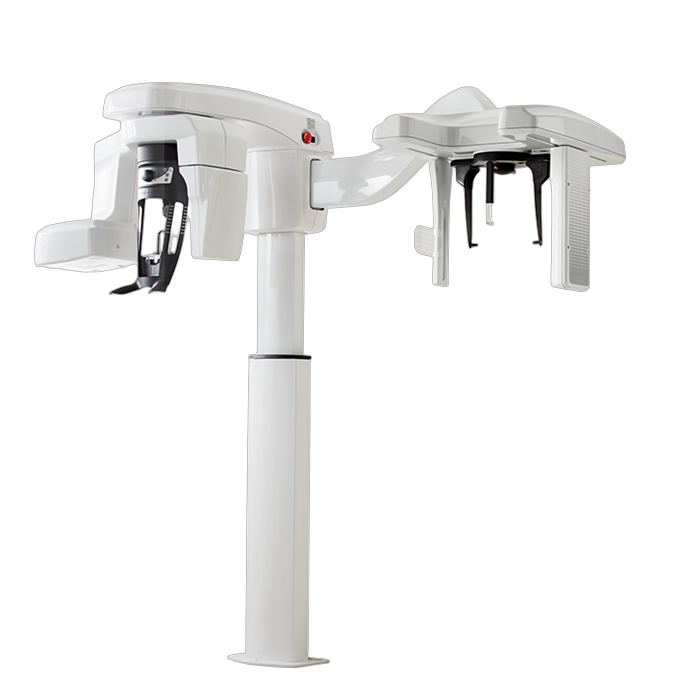
- Combo unit (OPG + CBCT): $60,000 - $100,000 - both 2D panoramic and 3D imaging in a single machine; eliminates need for two units
- Revenue per CBCT scan: $150 - $350 - compared to $0 additional revenue for a standard 2D OPG (typically bundled into consult fee)
- When CBCT is worth it: 5+ implant cases/month, orthodontic treatment planning, endodontic or surgical cases requiring 3D anatomy
- When 2D is sufficient: general diagnostics, basic perio assessment, screening, low-volume practices under 3 implant cases/month
- Room and compliance cost difference: CBCT rooms may need additional shielding ($5,000-$20,000) beyond what an OPG room requires
Introduction
Every dental practice needs x-ray imaging, but the choice between 2D (OPG/periapical) and 3D (CBCT) determines the diagnostic depth you can offer, the treatment cases you can plan in-house, and the revenue the imaging generates as a standalone service. In 2026, CBCT has moved from specialist-only technology to a mainstream option for Australian general practices, with combo units (OPG + CBCT in one machine) sitting at $60,000-$100,000. The question is no longer whether 3D imaging is useful, but whether your case mix and volume justify the price premium over a 2D-only system.
This comparison guide maps 2D and 3D imaging against the clinical, financial and compliance criteria that drive the purchasing decision. Get quotes for 3D dental x-ray machines to compare and buy from verified Australian suppliers once you have confirmed which technology level fits your practice. For OPG-specific pricing, see the MedicalSearch OPG machine listings.
Practices facing this decision:
- General practices deciding whether to add CBCT to an existing OPG setup
- New practices choosing between a standalone OPG and a combo OPG/CBCT unit
- Practices replacing an aging OPG and weighing the step up to 3D capability
- Any practice referring 3+ patients per month for external CBCT scans
Understand what each technology shows you
The first step is understanding the diagnostic difference. 2D imaging compresses 3D anatomy into a flat image. 3D imaging preserves the spatial relationships, showing depth, bone volume and structures that 2D misses or obscures.
Capability | 2D (OPG / Periapical) | 3D (CBCT) |
|---|---|---|
Bone volume measurement |
Not possible |
Precise measurement in all three dimensions |
Implant planning |
Estimated; no depth or density data |
Exact placement with nerve canal and sinus mapping |
Root canal anatomy |
Superimposed; missed canals common |
Individual canal identification in 3D |
Pathology detection |
Visible only when advanced |
Earlier detection of periapical and bony lesions |
TMJ assessment |
Limited to condyle outline |
Full 3D assessment of joint surfaces and disc space |
CBCT changes treatment decisions in 20-30% of implant and endodontic cases. Studies consistently show that 3D imaging reveals anatomy (additional canals, bone deficiencies, nerve proximity) that was not visible on 2D, leading to modified treatment plans. For practices placing implants, this translates directly to better outcomes and reduced surgical complications.
2D remains the standard for general screening and basic diagnostics. OPG panoramic imaging is fast, low-dose and sufficient for routine dental examinations, basic periodontal assessment and general screening. Not every patient needs a 3D scan.
Compare the costs
With the clinical difference understood, these are the cost numbers on each side.
Cost Category | 2D OPG Only | 3D CBCT (or Combo) |
|---|---|---|
Machine cost (new) |
$30,000 - $60,000 |
$35,000 - $120,000+ (combo: $60,000-$100,000) |
Room shielding |
$3,000 - $10,000 |
$5,000 - $20,000 (higher output may need more shielding) |
Annual servicing |
$1,500 - $3,000 |
$3,000 - $8,000 |
Revenue per scan (private fee) |
$0 - $50 (usually bundled in consult) |
$150 - $350 per CBCT scan (separate billable item) |
External referral cost avoided |
N/A |
$150 - $350 per scan previously referred out |
The financial case for CBCT rests on two numbers: scans billed and referrals avoided. A practice doing 8 CBCT scans per week at $250 generates $104,000/year in scan revenue. A practice referring 5 patients per month externally at $250/scan is spending $15,000/year in referral fees that in-house CBCT eliminates. Combined, these streams cover the $30,000-$60,000 price premium of a combo unit over a standalone OPG within 12-18 months. Get quotes for CBCT and combo systems to compare and buy from verified Australian suppliers to model the numbers for your case mix.
Understand the full cost breakdown (2026 prices)
Purchase price is only part of the picture. Here is the full investment for each technology path.
Category | Price Range (AUD) | Notes |
|---|---|---|
Standalone OPG (new) |
$30,000 - $60,000 |
2D panoramic only; some include cephalometric module |
Standalone CBCT (new) |
$35,000 - $85,000 |
3D only; requires separate OPG if 2D panoramic is also needed |
Combo OPG + CBCT (new) |
$60,000 - $100,000 |
Both 2D and 3D in one unit; saves floor space and eliminates need for two machines |
Room fitout (OPG only) |
$3,000 - $10,000 |
Standard shielding for 2D panoramic |
Room fitout (CBCT / combo) |
$5,000 - $20,000 |
Higher output may require additional shielding beyond OPG spec |
Used / refurbished |
$10,000 - $50,000 |
Verify sensor age, tube hours, software version and support status |
Decision framework - 2D vs 3D vs combo
Decision Factor | 2D OPG Only | 3D CBCT | Combo (OPG + CBCT) |
|---|---|---|---|
General practice, no implants |
Sufficient |
Not required |
Over-investment |
5+ implant cases/month |
Not suitable |
Suitable |
Best value |
Ortho treatment planning |
Basic only |
Preferred |
Best fit |
Endodontic specialist |
Not suitable |
Small FOV ideal |
Optional |
Budget under $60,000 |
Best fit |
Entry models only |
Not viable |
Replacing existing OPG |
Like-for-like |
Add separately |
Best time to upgrade |
Referring 3+ CBCT/month externally |
Lost revenue |
Strong ROI |
Best value |
Evaluate suppliers
You are ready to go to market. Use this checklist to assess each supplier against the same criteria.
Factor | What to Ask |
|---|---|
Both technologies available |
Does the supplier offer standalone OPG, standalone CBCT and combo units for side-by-side comparison? |
Image quality comparison |
Can the supplier demonstrate 2D and 3D image quality on the same patient case or phantom? |
FOV upgrade path |
If buying CBCT, can FOV be upgraded later without replacing the entire machine? |
Software compatibility |
Does the system integrate with your practice management and implant planning software? |
Room fitout |
Does the supplier coordinate shielding design and radiation safety assessment? |
Radiation licensing |
Does the supplier assist with state radiation licence applications? |
Training |
Is clinical training included for both 2D and 3D modes? |
Warranty |
What is the warranty on tube, sensor and software? Is local service available? |
Trade-in |
Does the supplier offer trade-in credit for your existing OPG? |
Finance |
Does the supplier offer equipment finance or chattel mortgage arrangements? |
Frequently asked questions
At what case volume does CBCT justify the cost premium over 2D?
At 5+ implant or complex diagnostic cases per month, in-house CBCT scan revenue covers the $30,000-$60,000 price premium over a standalone OPG within 12-18 months. Below that volume, the numbers are tighter and a refer-out model may be more cost-effective.
Should i buy a combo unit or add a separate CBCT to my existing OPG?
If your OPG is due for replacement (7+ years old), a combo unit at $60,000-$100,000 is the better investment because it consolidates both functions into one machine and one footprint. If your OPG is recent and working well, adding a standalone CBCT preserves that investment.
Does CBCT expose patients to more radiation than 2D?
Yes, but modern CBCT doses (20-200 microSv) are a fraction of medical CT (300-1,500 microSv). Low-dose protocols and small FOV settings minimise exposure. The diagnostic benefit must be justifiable per ALARA principles for each patient.
Can i charge separately for a CBCT scan?
Yes. CBCT is typically billed as a separate diagnostic imaging service at $150-$350 per scan for private patients. This is in addition to the consultation fee, making it a direct revenue-generating service.
Does adding CBCT require additional room shielding beyond an OPG setup?
In many cases, yes. CBCT units have higher output than OPG, and the radiation safety assessment may require additional lead lining on one or more walls. Budget $2,000-$10,000 more for shielding if upgrading an existing OPG room to CBCT.
Summary
- 2D OPG ($30,000-$60,000) is sufficient for general practice diagnostics without implant or complex surgical work
- 3D CBCT ($35,000-$120,000+) is justified for 5+ implant or complex cases per month; changes treatment plans in 20-30% of cases
- Combo OPG + CBCT ($60,000-$100,000) is the best value for practices needing both and replacing an aging OPG
- CBCT scans are separately billable at $150-$350 each, generating $39,000-$182,000/year at 5-10 scans/week
- Practices referring 3+ external CBCT scans/month are spending $4,500-$12,600/year that in-house CBCT eliminates
- Both technologies require state radiation licensing and annual compliance testing in Australia
Ready to source your dental x-ray machine?
Don't waste time contacting suppliers individually. MedicalSearch gives you direct access to verified Australian dental imaging suppliers - compare models, specs and pricing in one place, then request quotes from suppliers best matched to your practice.
- Compare models - filter by technology, FOV and region
- Request quotes - contact multiple verified suppliers with a single enquiry
- Contact suppliers directly - speak to specialists who service your state
→ Get and compare 3D dental x-ray machine quotes now →