
Key takeaways
- What you will pay: Mobile floor hoists typically list from $2,000 to $8,000, sit-to-stand units from $1,500 to $5,000, ceiling hoist motors from $2,000 to $10,000 before track, and bariatric lifters from $3,000 to $8,000.
- What drives the price: Safe working load, powered versus manual actuators, spreader bar and sling type, base and leg-spread adjustment, and integrated scales are the features that separate a budget unit from a premium one.
- Why it matters: Body stressing accounts for 47.6% of serious workers compensation claims in the nursing, care and support workforce, so the right hoist is a safety investment, not just equipment.
- How to fund it: Hoists and slings are commonly funded through the NDIS as assistive technology and through aged care packages, and rental suits short-term or palliative needs.
- The decision: Match the safe working load and setting to the patient first, then compare the price tag against maintenance, slings, and battery life.
Choosing a patient hoist is one of those purchases where getting the spec wrong costs far more than the equipment itself. A lifter that is too light for the resident, too wide for the bathroom, or fitted with the wrong sling attachment sits unused while staff go back to risky manual transfers. This guide sets out what patient hoists actually cost in Australia in 2026, the specs that change the price, and how to fund the purchase so you buy once and buy right.
Why safe patient handling is worth the spend
Manual patient handling is one of the most injury-prone tasks in Australian workplaces. According to Safe Work Australia, body stressing makes up 47.6% of serious workers compensation claims in the nursing, care and support workforce, well above the 37.8% seen across all occupations. The same profile shows this workforce carries a musculoskeletal injury frequency rate around 2.3 times the national average, and that 54.5% of body-stressing claims are linked to handling a person rather than an object.
Demand for safe handling is only climbing. Around 1.34 million Australians used aged care services in 2024-25, reported by GEN Aged Care Data, and the population aged 85 and over is projected to more than double to over one million people, per the Australian Bureau of Statistics. On the disability side, the NDIS reported more than 692,000 active participants at the end of 2024. A hoist that prevents a single back injury often pays for itself against the cost of a claim and lost staff time.
What patient hoists cost in Australia
Prices vary widely by type, so treat the bands below as a price guide for comparison rather than fixed quotes. Ceiling hoist figures cover the motor unit only: a fully installed room system also needs track and installation, which adds to the total.
| Hoist type | Typical price range | Best suited to |
|---|---|---|
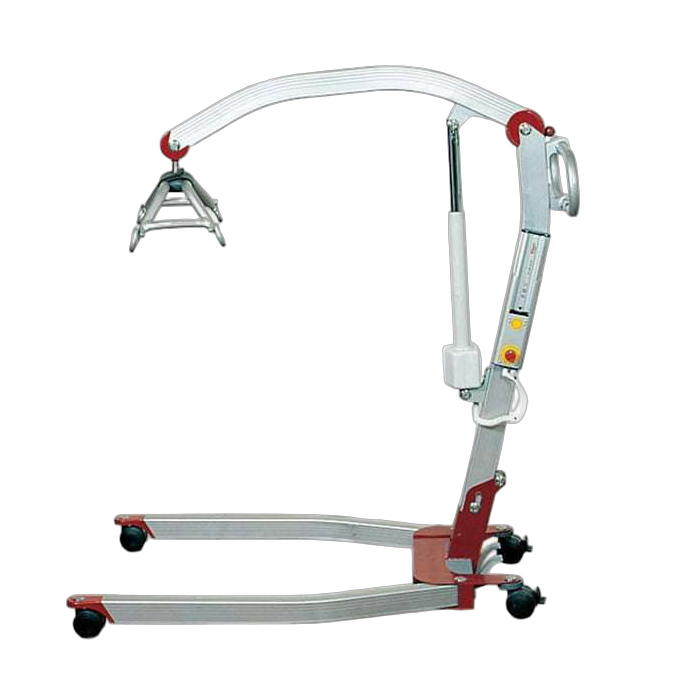
| Mobile / floor hoist (electric) | $2,000 - $8,000 | General transfers, floor recovery after falls |
| Standing / sit-to-stand hoist | $1,500 - $5,000 | Residents with some weight-bearing ability |
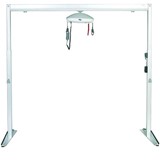
| Ceiling hoist (motor unit only) | $2,000 - $10,000 | Fixed rooms, frequent lifts, tight floor space |
| Bariatric lifter (SWL 300-350 kg) | $3,000 - $8,000 | Higher weight capacity requirements |
| Slings (per unit) | $50 - $500 | Matched to hoist and transfer type |
Two points catch buyers out. First, slings are a recurring cost, not a one-off: you will need several types and sizes, and they wear and must be replaced on a schedule. Second, the price tag is only part of the story. A hoist running daily needs battery replacements, servicing, and inspection, so look at total cost of ownership across five years rather than the number on the quote. You can compare current listings on the patient hoist and standing hoist and lifter category pages.
The specs that decide the price
Spec sheets hide the numbers that matter. These are the features to line up when you request quotes:
- Safe working load (SWL): Standard mobile units sit around 150 to 200 kg, while bariatric models reach 300 to 350 kg or more. This is the single most important match to the patient and the biggest price driver.
- Spreader bar and sling attachment: Loop, clip, or clip-and-loop bars determine which slings fit. A 2-point bar suits general transfers, a 4-point bar spreads load and adds comfort. Confirm your slings and hoist share the same attachment.
- Powered versus manual: Electric actuators are now standard and safer for staff than hydraulic pumping. Check the battery type, charge time, and whether a spare swappable battery is available so the hoist is never out of service.
- Base and leg spread: An adjustable leg spread lets the base open around chairs, beds, and wheelchairs, then narrow for doorways. Braked castors and base width decide how it handles in a real bathroom.
- Lifting range: A low minimum pick-up height matters for lifting a resident off the floor after a fall, while the maximum height sets how high you can transfer.
- Integrated scales: Spreader-bar weigh scales remove a separate weighing step and are a genuine time saver in clinical settings, though they lift the price.
Matching the hoist to your setting
One size rarely fits a whole facility, so profile your residents and your rooms before you shortlist machines rather than buying a single model across the board.
A realistic scenario
Consider a 40-bed residential aged care home in regional Victoria replacing an ageing fleet. A blanket purchase of one model rarely works. Most residents are handled well by electric mobile floor hoists with a 200 kg safe working load and a range of general-purpose and toileting slings. A small number of higher-weight residents need a bariatric lifter rated to 350 kg, and two rooms with daily lifts and limited floor space are better served by fixed ceiling hoists once track and installation are costed in.
The lesson is to profile your residents and rooms before you shortlist machines. Involving an occupational therapist early helps you match safe working load, sling type, and setting to each person, which avoids the expensive mistake of buying units that then sit idle. For frequent lifts in a single room, browse the ceiling hoist options, and the patient hoist buying guide walks through how to weigh capacity, environment, and safety features side by side.
Buy, rent, or fund it
How you pay can matter as much as what you pay. Weigh these paths:
- NDIS funding: Hoists and slings are commonly funded as assistive technology capital supports with an appropriate assessment. Standing hoists, ceiling hoists, and slings are regularly approved items.
- Aged care funding: Equipment can be funded through home care packages or supplied by residential providers, making hoists an operational rather than personal cost for many older Australians.
- Rental: For short-term, respite, or palliative needs, hiring an electric floor hoist avoids a full purchase and the storage and maintenance that follow. Rent for the temporary need, buy for the long-term one.
Frequently asked questions
How much does a patient hoist cost in Australia?
Mobile floor hoists generally list from $2,000 to $8,000, sit-to-stand units from $1,500 to $5,000, and bariatric lifters from $3,000 to $8,000. Ceiling hoist motors start around $2,000 but need track and installation on top. Slings are a separate recurring cost at roughly $50 to $500 each.
Will the NDIS pay for a patient hoist?
Hoists and slings are commonly funded through the NDIS as assistive technology capital supports, subject to an appropriate assessment. Standing hoists, ceiling hoists, and slings are regularly approved items, and equipment can also be funded through aged care home care packages.
What weight can a patient hoist lift?
Standard mobile hoists carry a safe working load of around 150 to 200 kg, while bariatric models are rated to 300 to 350 kg or more. The safe working load must comfortably exceed the heaviest person being lifted, so it is the first spec to confirm.
Can you hire a patient hoist instead of buying one?
Yes. Rental is widely offered and suits short-term, respite, or palliative needs, avoiding the upfront cost, storage, and maintenance of ownership. As a rule of thumb, rent for a temporary need and buy for a long-term one.
What matters most
A patient hoist is a safety decision first and a price decision second. Get the safe working load, sling attachment, and setting right, and a mid-range unit will serve for years while protecting your staff and residents. Get them wrong, and even a premium machine ends up parked in a corridor. Profile the people and the rooms, cost the slings and servicing alongside the price tag, then choose the funding path that fits your budget.
Ready to compare capacity, slings, and pricing on safe patient handling? Request quotes from patient hoist suppliers across Australia here.

-160x160-state_article-rel-cat.png)