
Key takeaways
- What you pay: Medical fridges and freezers on MedicalSearch list between $1,500 and $5,000, averaging around $3,250, with large-capacity and freezer units at the top of the band.
- What drives price: Capacity, temperature range, monitoring and alarms, door type, and compliance features separate a compact under-bench unit from a large pharmacy fridge.
- Why it matters: Vaccines must stay between +2C and +8C, and a domestic fridge is not built for the job, so a purpose-built unit protects both patients and stock.
- Compliance: The National Vaccine Storage Guidelines require a purpose-built vaccine refrigerator, twice-daily temperature recording, and annual servicing.
- The decision: Match capacity, temperature range, and monitoring to your stock and setting, then buy on total cost of ownership rather than the price tag.
A medical fridge is one of the most important pieces of equipment in a pharmacy, GP clinic, or hospital ward. Store vaccines or medicines at the wrong temperature and a single breach can spoil thousands of dollars of stock and leave patients revaccinated. This guide covers what medical fridges and freezers cost in Australia, the specs that change the price, and the compliance rules that decide which unit is fit for purpose before you compare quotes.
Why a purpose-built unit is non-negotiable
Vaccines are fragile biological products. The National Vaccine Storage Guidelines, Strive for 5, published by the Australian Government Department of Health, require vaccines to be stored between +2C and +8C, with +5C the target. The guidelines are clear that domestic refrigerators, including bar fridges, are not built or designed to store vaccines and are not suitable. Many vaccines are damaged or destroyed at temperatures outside the safe range.
That is why a purpose-built medical fridge is the baseline, not an upgrade. It holds a stable temperature across every shelf, alerts you before a breach, and gives you the records that show your stock stayed safe. For pharmacies, Quality Care Pharmacy Program (QCPP) cold chain compliance depends on it.
What medical fridges and freezers cost in Australia
On MedicalSearch, listed prices for medical fridges and freezers range from roughly $1,500 to $5,000, averaging about $3,250. Here is how the money maps to the unit:
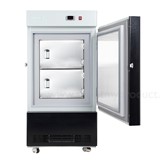
- Compact under-bench fridges: From around $1,500 to $2,800. Suited to small clinics and low stock volumes, often under-counter to save space.
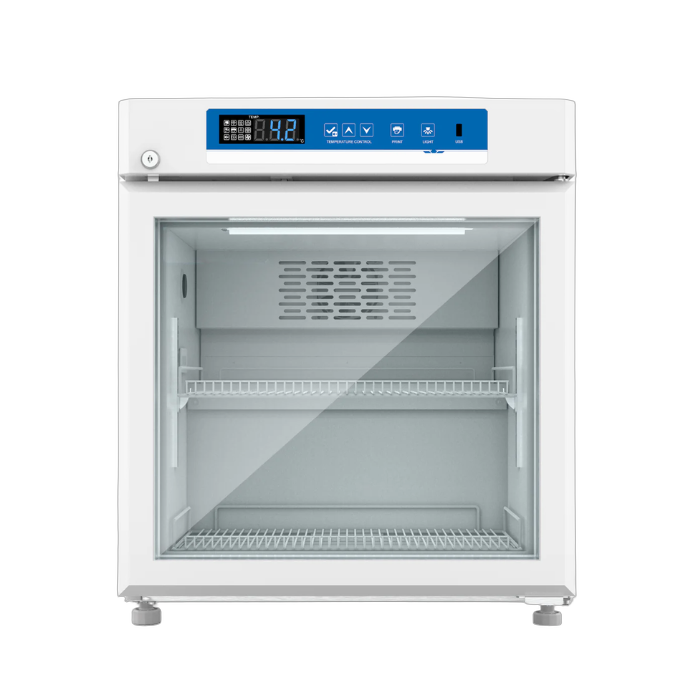
- Standard pharmacy and clinic fridges: Roughly $2,800 to $5,000. Larger capacity, glass or solid doors, and full monitoring for busy practices.
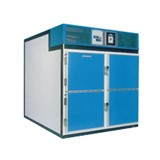
- Large-capacity and freezer units: At the top of the band and beyond, for hospitals, large pharmacies, and frozen vaccine storage.
| Type | Typical price band | Best suited to |
|---|---|---|
| Compact under-bench fridge | $1,500 - $2,800 | Small clinics, low stock volumes |
| Standard pharmacy / clinic fridge | $2,800 - $5,000 | Busy practices and pharmacies |
| Large-capacity or freezer unit | $5,000+ | Hospitals and frozen vaccine storage |
The specs that change the price
When you request quotes, these are the specs that decide both fitness for purpose and cost:
- Capacity: Rated in litres, this sets how much stock you can hold. Size to your peak stock plus growth, since overcrowding a fridge disrupts airflow and temperature stability.
- Temperature range and stability: A medical fridge holds a tight +2C to +8C across all shelves with forced-air cooling. Freezers for frozen vaccines run far colder. Even temperature is what you pay for.
- Monitoring and alarms: Digital min and max displays, data loggers, and alarms for high or low temperature, door open, and power failure protect your stock. A data logger and back-to-base alarm add cost but support compliance.
- Door type: Glass doors let you check stock without opening; solid doors hold temperature better. Self-closing, lockable doors help prevent breaches and unauthorised access.
- Power protection: An uninterruptible power supply or battery backup guards against a cold chain breach during an outage. It adds cost but can save a fridge full of vaccines.
Running costs and total cost of ownership
The purchase price is one line in a longer budget. Factor these in from day one:
- Annual servicing and calibration: The guidelines call for annual servicing by a qualified technician and periodic calibration of thermometers and data loggers. Book this as a recurring cost.
- Energy use: A medical fridge runs continuously. Energy-efficient models cost more upfront but lower the running bill over the unit's life.
- Monitoring subscriptions: Some cloud or back-to-base monitoring systems carry an ongoing subscription after an introductory period. Confirm the cost before you commit.
A realistic scenario
Picture a growing GP clinic in regional New South Wales storing government-funded vaccines in an ageing fridge with a single dial thermostat and no alarm. A weekend power flicker goes unnoticed, and the following week a cold chain breach forces the clinic to discard its stock and reorder.
A standard purpose-built pharmacy fridge with forced-air cooling, a data logger, and door, temperature, and power-failure alarms, landing around $3,000 to $4,000, would have alerted staff before the breach. The clinic sizes the unit to its peak vaccine stock, adds a UPS for power protection, and treats servicing and calibration as planned running costs. Against the value of one fridge of spoiled vaccines, the spend pays for itself quickly.
If you store vaccines specifically, compare dedicated vaccine fridges, and for immunisation outreach or transport, a portable vaccine fridge keeps the cold chain intact on the road. For a step-by-step walk through selection, the guide to choosing a vaccine fridge covers the features that matter.
Frequently asked questions
Can I use a domestic fridge for vaccines?
No. The National Vaccine Storage Guidelines state that domestic and bar fridges are not suitable for vaccine storage. You need a purpose-built vaccine refrigerator that holds a stable +2C to +8C across all shelves.
What temperature should it hold?
Vaccines are stored between +2C and +8C, with +5C the target. Frozen vaccines are stored far colder in a dedicated freezer. Temperatures outside the range must be recorded and reported as a cold chain breach.
How often does it need servicing?
The guidelines recommend annual servicing by a qualified refrigeration technician, plus periodic calibration of thermometers and data loggers. Temperatures should be recorded at least twice daily.
Do I need alarms and a data logger?
Yes, for safe practice. Alarms for temperature, door open, and power failure catch problems early, and a data logger provides the record that supports compliance and quality assurance.
What matters most
A medical fridge is a compliance and stock-protection decision, not just an appliance purchase. The unit that pays for itself holds a stable temperature, alerts you before a breach, and is sized to your stock. Get capacity, temperature stability, and monitoring right first, follow the National Vaccine Storage Guidelines, and factor servicing and calibration into total cost of ownership rather than the price tag alone.
Ready to compare medical fridge specs and pricing? Get quotes from medical fridge and freezer suppliers across Australia here.
-160x160-state_article-rel-cat.png)