
Key takeaways
- Purchase price: $3,000 for a standard workplace AED (AUD 2026) - but 5-year total ownership cost typically runs $2,800–$5,500 once pads, battery, and cabinet are included.
- Electrode pad replacement: $80–$180 per set every 2–3 years - the most frequently missed recurring cost in workplace AED budgets.
- Battery replacement: $150–$500 - recommended for visibility and accessibility under WHS duty of care obligations, and often excluded from unit quotes.
- Wall cabinet and signage: $150–$500 - mandatory for compliant workplace installation under WHS Act 2011 PCBU obligations and often excluded from unit quotes.
- Annual service and inspection: $100–$300/year for a maintenance program - or zero if your AED performs daily self-checks and the workplace has a documented inspection register.
- Paediatric pad kit: $80–$150 - required if your workplace includes children or if state WHS guidance for your industry recommends paediatric capability.
- TGA registration: All AEDs sold in Australia must be listed on the ARTG - verify the ARTG number before purchasing from any supplier.
- Multi-unit workplaces: Bulk purchase pricing is available from most suppliers - a 3-unit order typically saves 10–20% per unit vs single-unit pricing.
AED defibrillator total cost of ownership: What Australian workplaces budget vs what they actually spend
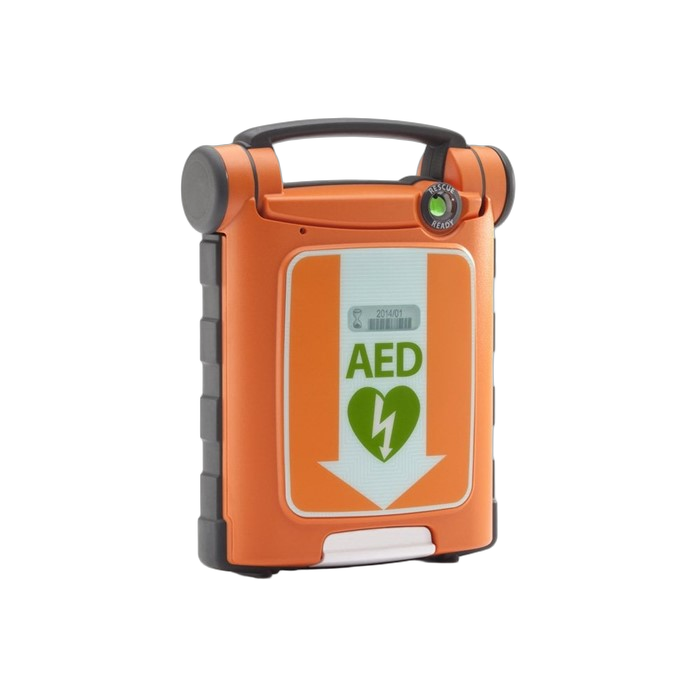
An AED defibrillator with a –$2,500 price tag is one of the most deceivingly low-maintenance pieces of safety equipment a workplace can own - and one of the most under-budgeted. The device purchase is straightforward. What catches workplaces out is the ongoing cost of keeping it genuinely ready: pad replacement cycles, battery lifespan, cabinet and signage requirements, paediatric kit needs, and the annual inspection obligations under the WHS Act 2011. This guide builds the complete 5-year ownership cost so your procurement decision and your annual WHS budget both reflect what an AED actually costs to maintain. If you are still deciding which AED to purchase, the AED defibrillator buying guide covers model selection and workplace compliance in detail first.
This guide is for WHS managers, office managers, HR leads, and business owners responsible for workplace first aid compliance. It covers every cost line for AED ownership in Australia in 2026. Get quotes for AED defibrillators on MedicalSearch to compare supplier pricing and consumable costs across verified Australian suppliers. Workplaces carrying these costs include:
- Corporate offices, co-working spaces, and business parks with 20+ employees
- Gyms, fitness centres, and sporting clubs with high cardiac event risk profiles
- Schools, childcare centres, and educational campuses
- Manufacturing, warehousing, and construction sites under WHS PCBU obligations
- Aged care facilities and community health services
Confirm your AED configuration - costs vary by model and setting
Before modelling any cost, confirm which AED configuration you are purchasing or currently operating. Your model determines your pad replacement cycle, battery lifespan, and whether paediatric capability requires a separate purchase.
Configuration | Key Cost Driver | 5-Year Running Cost |
|---|---|---|
Standard semi-automatic AED |
Pad sets every 2–3 years, battery every 4–7 years |
$600–$1,200 |
Fully automatic AED |
Same pad and battery cycle - slightly higher unit price |
$600–$1,200 |
AED with integrated pad/battery cartridge |
Single cartridge replacement every 4 years - simpler cost model |
$400–$900 |
Multi-unit workplace deployment (3+ units) |
Staggered pad replacement across units - bulk consumable savings available |
–$3,000 total |
Standard pad-and-battery models (HeartSine 350P, ZOLL AED 3, Defibtech Lifeline) have separate pad and battery replacement cycles - two distinct recurring cost lines that must be tracked independently against expiry dates.
Integrated cartridge models (HeartSine 500P PAD-PAK) combine pads and battery into a single replaceable unit - simpler to manage for workplaces without dedicated WHS staff, and the consumable cost is consolidated into one line item per replacement cycle.
The key cost specifications
With your AED model confirmed, these are the specifications that determine how much you will spend annually - and which costs most workplaces miss entirely at purchase stage.
Specification | Typical Range | Cost Implication |
|---|---|---|
Electrode pad shelf life |
2–5 years |
Shorter shelf life means more frequent replacement at $80–$180 per set - confirm the expiry date of pads included with purchase |
Battery lifespan |
4–7 years standby |
Longer battery life reduces replacement frequency - a 7-year battery at $250 costs $35/year vs a 4-year battery at $180 at $45/year |
Self-test frequency |
Daily, weekly, or monthly |
Daily self-check AEDs reduce the need for paid inspection programs - confirm self-test capability before paying for a service contract |
Paediatric capability |
Built-in key/mode or separate pad kit |
Separate paediatric pad kit adds $80–$150 to initial cost and requires its own replacement cycle - mandatory for workplaces with children present |
IP/dust and water rating |
IP54–IP56 |
Higher-rated units for outdoor, construction, or high-humidity environments may carry a $200–$600 price premium but reduce accidental damage risk |
Warranty period |
5–8 years |
An 8-year warranty defers service costs through most of the first ownership cycle - compare warranty scope across suppliers before shortlisting |
Full cost breakdown (2026 prices)
Purchase price is only part of the picture - most workplace cost models miss at least three of the following line items. Here is every cost you need to budget.
Cost Category | Price Range (AUD) | Notes |
|---|---|---|
AED unit (entry semi-automatic) |
–$2,000 |
Standard workplace unit - HeartSine 350P, Defibtech Lifeline, Mindray BeneHeart C1 |
AED unit (fully automatic / premium) |
$2,000–$3,000 |
HeartSine 500P, ZOLL AED 3, Mindray BeneHeart C2 - higher unit price, no shock button required |
Wall cabinet and mounting hardware |
$150–$500 |
Alarmed cabinet recommended for high-traffic or unsecured locations - often excluded from unit quotes |
Signage and floor markings |
$30–$80 |
Required for compliant workplace installation under WHS obligations - routinely overlooked |
Paediatric pad kit |
$80–$150 |
Required where children are present - confirm whether included in base unit price |
Electrode pad replacement |
$80–$180 per set |
Every 2–5 years depending on model - track expiry date from purchase |
Battery replacement |
$150–$350 per battery |
Every 4–7 years - some models use integrated pad/battery cartridge ($250–$400) |
Annual inspection / service program |
$0–$300/year |
$0 if AED performs daily self-checks and workplace maintains a documented inspection register; $100–$300/year for a supplier maintenance program |
5-year total ownership cost (single unit) |
$2,800–$5,500 |
Includes unit, cabinet, signage, 1–2 pad replacements, 1 battery replacement, and paediatric kit |
The gap between a purchase price and a $2,800–$5,500 five-year cost is almost entirely driven by three items: electrode pad replacement, cabinet and signage, and battery replacement. Workplaces that budget purchase price only and do not track pad expiry dates are the most common compliance failure pattern - an expired pad set on an AED is a WHS Act breach regardless of whether the unit was purchased in good faith. For a workplace AED at $3,000, get quotes for AED defibrillators on MedicalSearch and ask each supplier for a consumable replacement schedule and 5-year cost model before committing.
Plan the asset - depreciation and financing
The ATO effective life for defibrillators and emergency medical equipment is 5 years - diminishing value rate 40%, prime cost rate 20%. Most AED units at –$3,000 fall within the $20,000 instant asset write-off threshold for the 2025–26 financial year and can be fully expensed in the year of purchase. Multi-unit deployments for larger workplaces may aggregate above this threshold depending on total spend - model per-unit vs aggregate for your tax position. Residual value at end of effective life is typically minimal; AEDs are replaced rather than resold once pads and batteries reach end of cycle.
Most AED purchases are outright - the price point does not typically warrant lease or hire-to-own structuring. For larger multi-site deployments (10+ units), some suppliers offer bundled service agreements that include consumable replacement on a fixed annual fee - worth comparing against the per-unit replacement cost model. The workplace safety equipment guide covers the broader first aid equipment budget context for compliance-driven purchasing decisions.
Evaluate suppliers on cost
You are ready to go to market. Use this checklist to assess what each supplier includes and excludes from their total cost picture.
Factor | What to Ask |
|---|---|
Consumable replacement schedule |
What are the pad expiry date and battery replacement interval for this model at standard standby use? |
Pad cost at replacement |
What is the current replacement pad set price - and is it the same set included with the unit or a different SKU? |
Integrated vs separate battery |
Does this model use an integrated pad/battery cartridge or separate components - and what is the replacement cost for each? |
Paediatric capability |
Is paediatric pad capability built in, via a separate key, or via a separately purchased pad set - and what does it cost? |
Cabinet and signage inclusions |
Is a wall cabinet and compliant signage included in the quoted price or charged separately? |
Inspection program |
Does the unit perform daily self-checks - and do you offer a maintenance program if our WHS policy requires one? |
ARTG registration |
Can you provide the ARTG listing number confirming TGA registration for this unit? |
Warranty scope |
What does the warranty cover - unit only, pads, battery - and what is the warranty period? |
Multi-unit pricing |
Is bulk pricing available for a 3+ unit deployment - and does it include a consolidated consumable replacement schedule? |
Training inclusions |
Is user familiarisation training included in the purchase price or available at cost? |
Frequently asked questions
What does an AED defibrillator actually cost to own over five years in Australia?
A standard workplace AED purchased at –$2,500 typically costs $2,800–$5,500 over five years once cabinet, signage, pad replacement, battery replacement, and a paediatric kit are included. The purchase price alone accounts for roughly half of the true five-year cost.
At what point does a workplace's AED become non-compliant under WHS obligations?
An AED with expired electrode pads, an expired battery, or no documented inspection register may expose the PCBU to WHS compliance risk, as the device would not be considered ready for emergency use. Pad and battery expiry dates must be tracked from the date of manufacture printed on the packaging - not from the purchase date.
When does a workplace need a paediatric pad kit in addition to a standard AED?
A paediatric pad kit is recommended wherever children under 8 years may be present - including schools, childcare centres, sports clubs, and workplaces with regular child attendance. Paediatric kits cost $80–$150 and require their own expiry date tracking separate from adult pad replacement.
Is a service contract necessary for a workplace AED, or do self-checking units eliminate that cost?
AEDs with daily self-check capability may not require a paid service contract provided the workplace maintains a documented visual inspection register in line with its WHS procedures - confirming the status indicator light is green and no alerts are present. A paid maintenance program at $100–$300/year adds value for workplaces where WHS documentation requirements are audited or where no dedicated safety officer is assigned.
Summary
- Five-year total ownership cost is $2,800–$5,500 per unit - roughly double the purchase price once consumables, cabinet, signage, and paediatric kit are included
- Electrode pad replacement at $80–$180 per set every 2–5 years is the most frequently missed recurring cost - and the most common compliance failure trigger
- Cabinet and signage at $180–$580 are routinely excluded from supplier quotes and excluded from most workplace budget submissions
- Daily self-check AEDs eliminate the need for paid service contracts provided a documented inspection register is maintained - saving $100–$300/year
- Multi-unit bulk pricing saves 10–20% per unit and typically includes consolidated consumable replacement tracking - the correct structure for multi-site businesses
Don't waste time contacting suppliers individually. MedicalSearch gives you direct access to verified Australian AED defibrillator suppliers - where medical buyers request and compare multiple quotes so they can buy with confidence.
- Get quotes for AED defibrillators - contact multiple verified suppliers with a single enquiry
- Compare models - filter by configuration, brand, and region
- Contact suppliers directly - speak to specialists who service your state
→ Get and compare AED defibrillator quotes now → https://www.medicalsearch.com.au/buy/aed-defibrillator